

KL AI Show & Tell: Multiplayer Games, Content Agents, and Evals (19 Nov 2026)
Seven Kuala Lumpur builders shared a local-multiplayer game, AI employee evals, creator and engineering content agents, Bahasa Malaysia TTS, and a QR tool.
Seven builders shared works in progress at our 19 Nov 2026 Weekly Show & Tell in Kuala Lumpur. Across the room, a few clear threads stood out: pairing coding agents with explicit human taste, grounding AI outputs in known sources and evaluations, and testing where automated content workflows actually hold up.
Overnight Prototyping and Scratch-Your-Own-Itch Tools
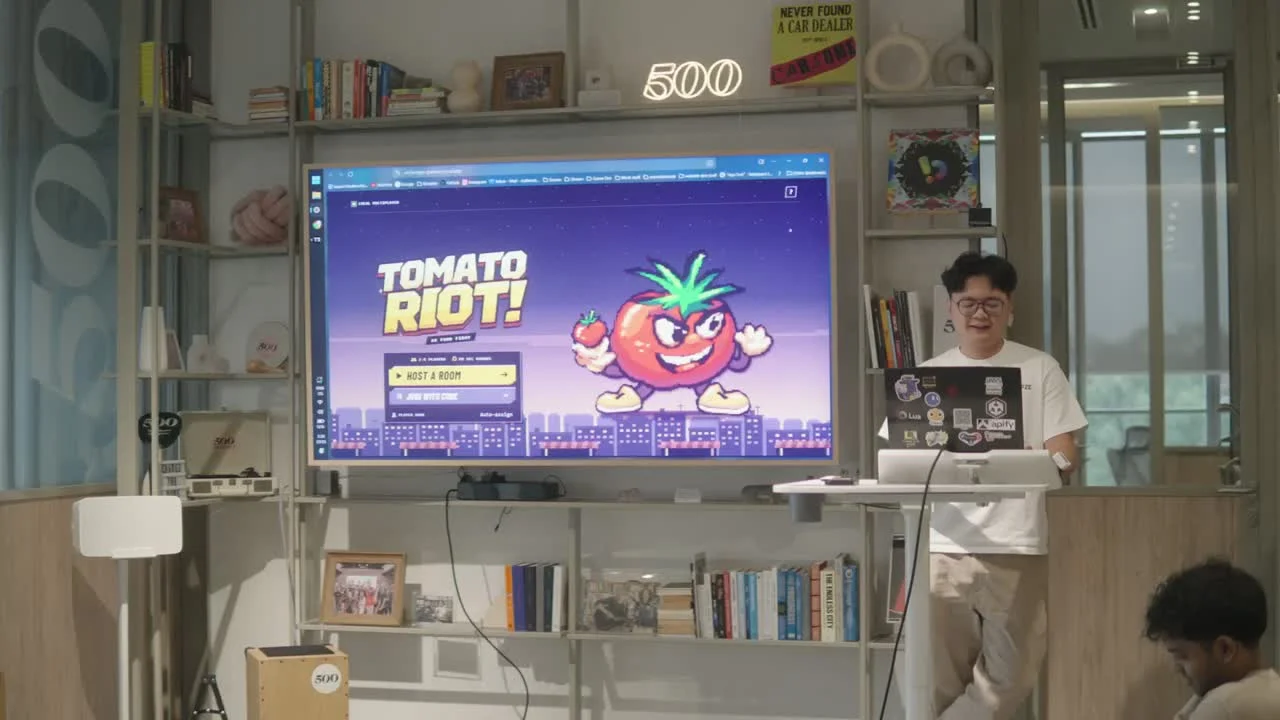
Nathan Hor opened with TOMATO RIOT!, a local-multiplayer game inspired by Splatoon and informed by his AR and VR event software work. The concept supports up to eight players who scan a QR code to join a host room, pick a color, and throw tomatoes at each other once the countdown ends. On screen, Nathan walked through the title screen, host-room lobby, player list, countdown, results view, and an open-source repository README. He noted that live gameplay could not be run on the laptop during the demo.
The practical lesson from his build was about where coding agents still need a firm hand. Nathan built the initial version the night before and refined it right before presenting, noting that an earlier version looked poor until he gave explicit animation guidance and swapped in his own graphics. During Q&A, he also compared model versions, pointing out that the newer iteration used fewer tokens for a similar experience and ran much faster, even though visual polish still fell back on his own assets.
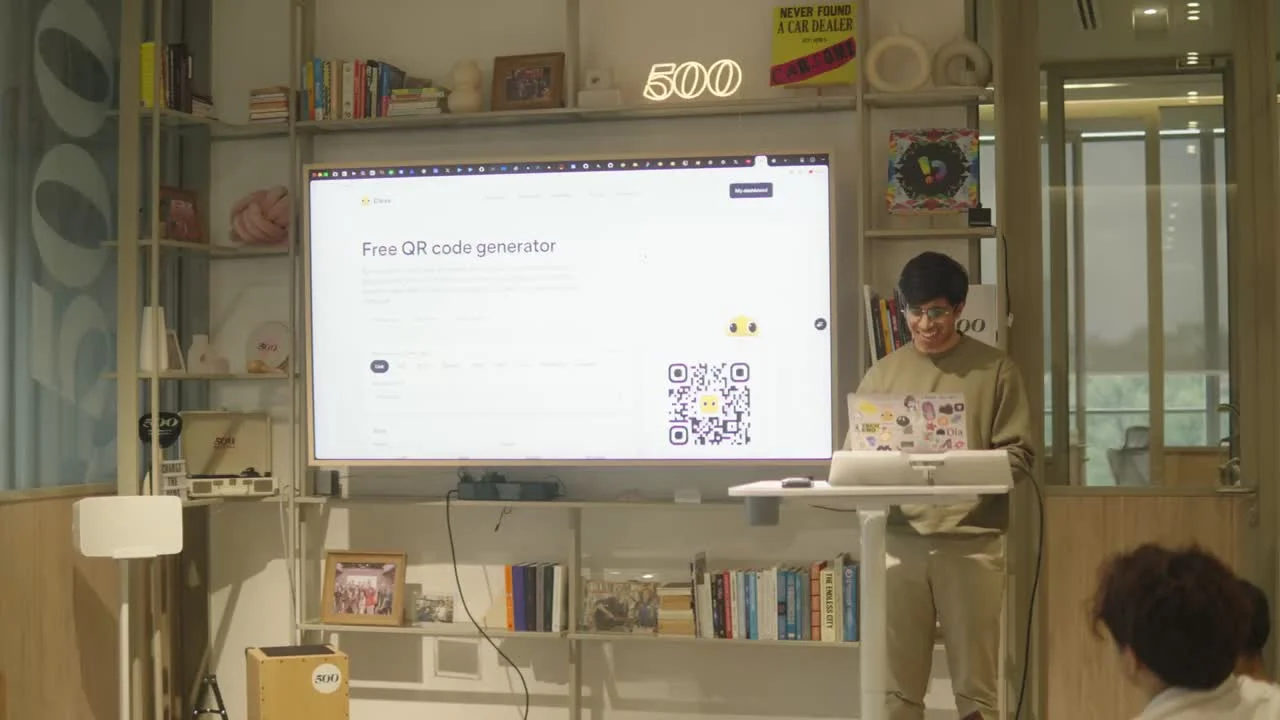
Closing out the night on the opposite end of complexity, Ashvin Praveen introduced a simple QR code generator he put together after getting annoyed by ads and slow redirects on existing online generators at events. It was a quick reminder that small, single-purpose utilities built to remove daily friction are still worth shipping.
Evaluations, Citations, and Systems Learning
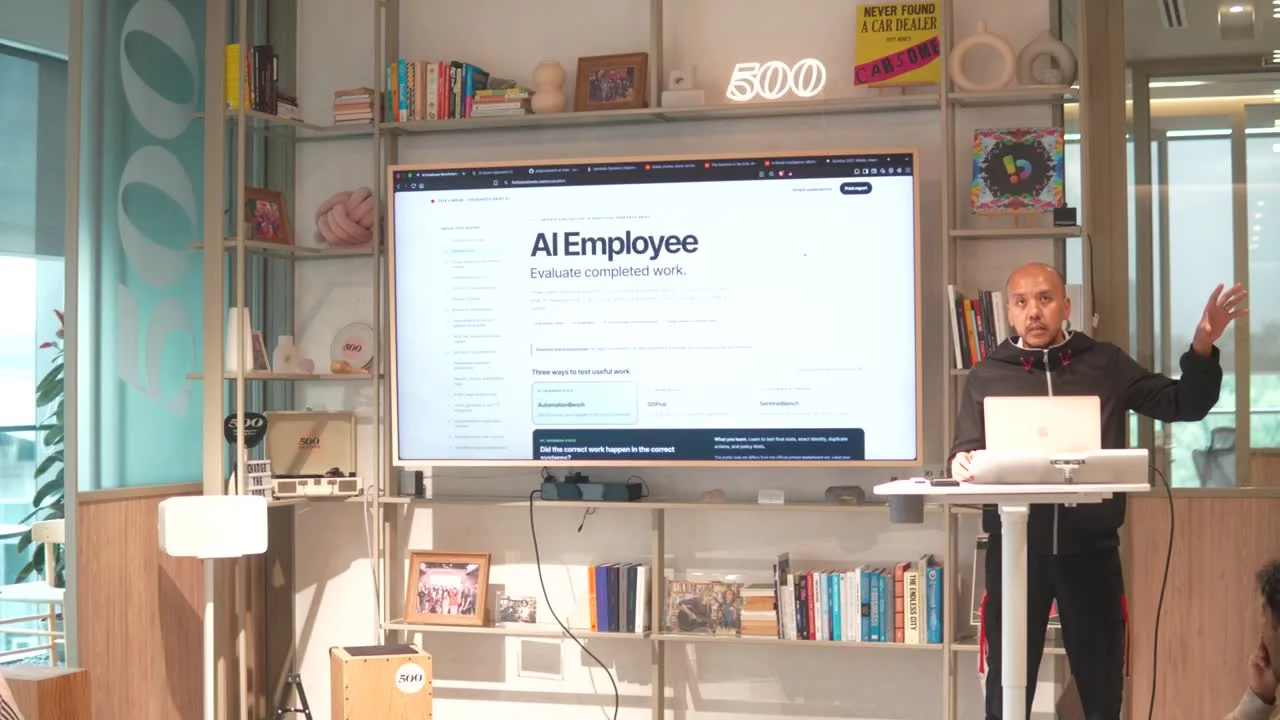
Khalil Nooh split his slot between two related themes: how to trust AI work, and how to learn deeply with known sources. First, he revisited his work on AI employee evaluations, showing a page headed “Evaluate completed work” that adapts public benchmarks (including AutomationBench, GDPval, and SentinelBench) into private checks. He also pointed to a video on formal verification in production (“Review Proof, Not Code”) as a direction worth watching.
Second, Khalil walked through a single-page systems-learning LMS he assembled from three books recommended on X. Rather than letting an AI system pull from opaque web research, he fed in sources he already trusted and structured the output into 20 chapters with labs, small activities, tutorials, and explicit references. His core takeaway: citations matter because you need to trace any sentence or idea back to the exact section of a book.
Content Agents, Engineering Explainers, and Bahasa Malaysia TTS
Three presenters dug into AI-assisted media and creator workflows from very different angles.
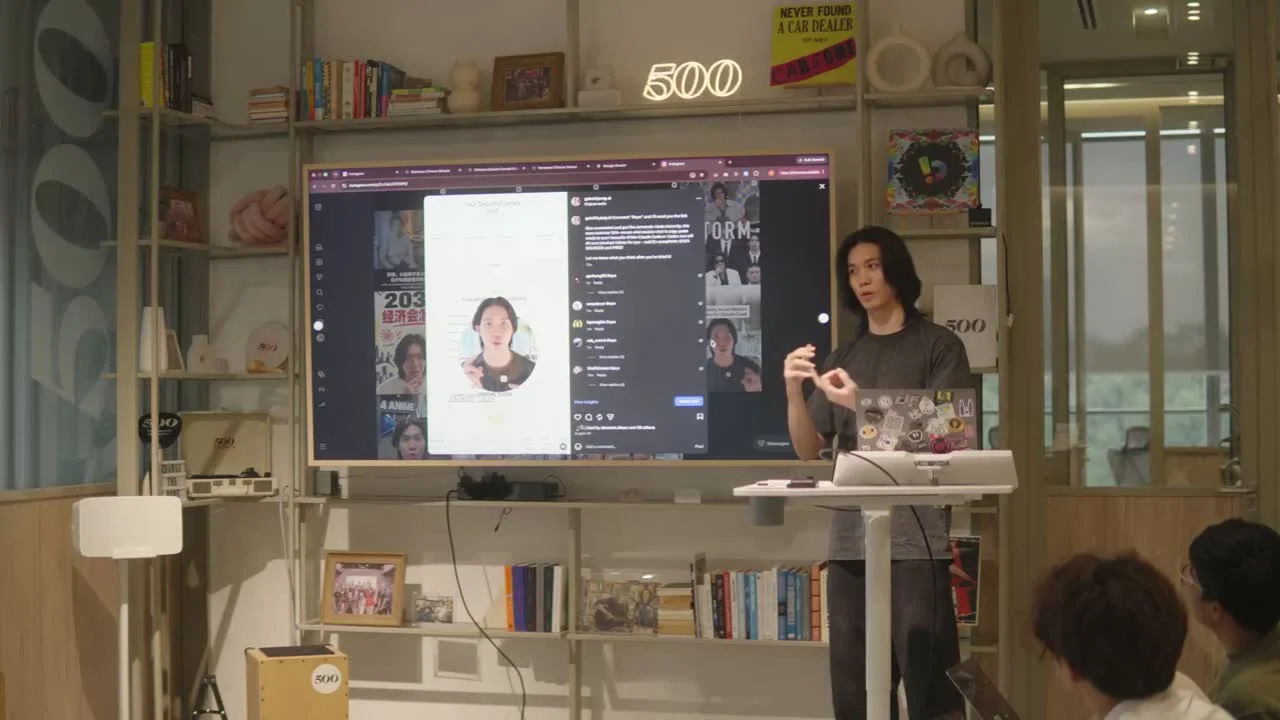
Gabriel Yong shared how he saves Instagram posts while browsing on desktop to research and digest topics for new content. He showed a content helper interface featuring dark content cards, filters, transcript and breakdown views, and audio panels, and confirmed in Q&A that Apify feeds part of the collection queue. Gabriel was candid about the open trade-off he is still testing: whether to chase high-volume posting across multiple accounts or invest in fewer, higher-quality pieces.
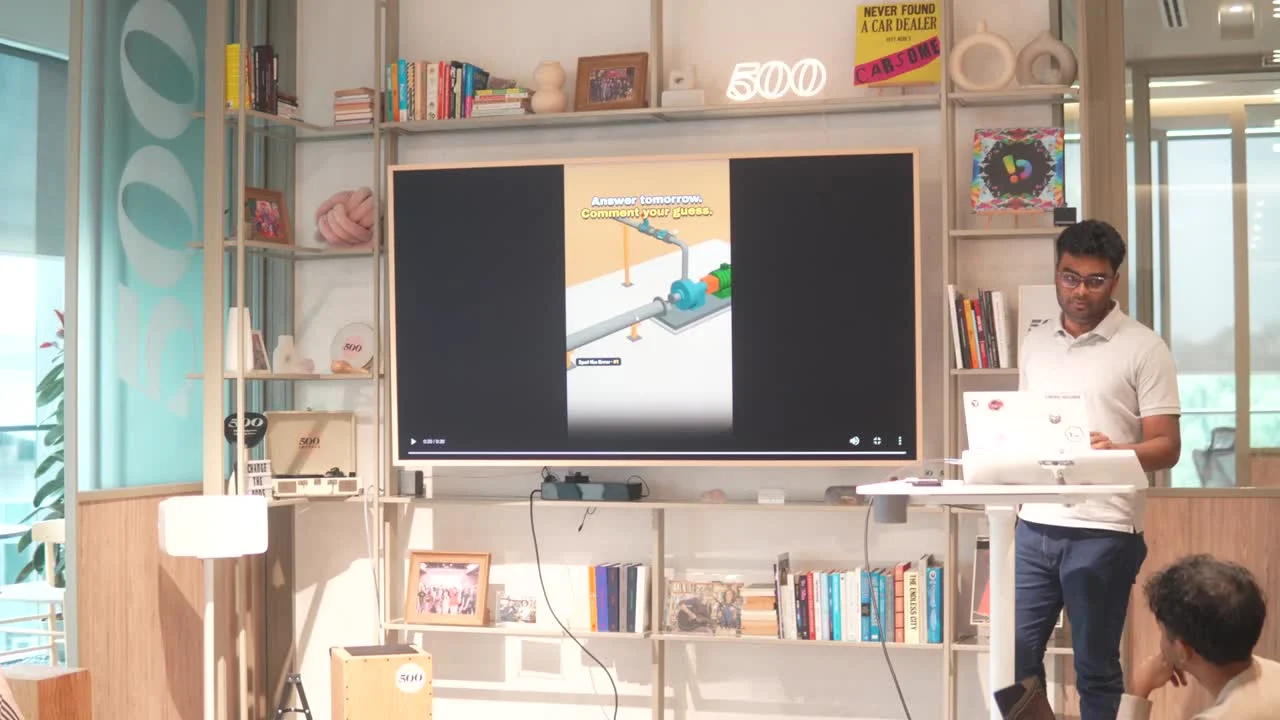
Puviin Varman approached social media from a mechanical engineering and consultancy perspective, aiming to reach construction and oil-and-gas audiences. After finding that posting twice a week was not gaining traction, he began using an agent workflow to research topics and draft recurring formats. On screen, he walked through illustrated engineering comics (including a gearbox fit-check strip), a vertical absorber explainer explaining how amine captures CO2 from flue gas, and “spot the error” pipe-and-pump videos that prompt viewers to comment their guesses. His practical note for builders: once you repeatedly review an agent’s output for the same issues, turn that checklist into a reusable skill.
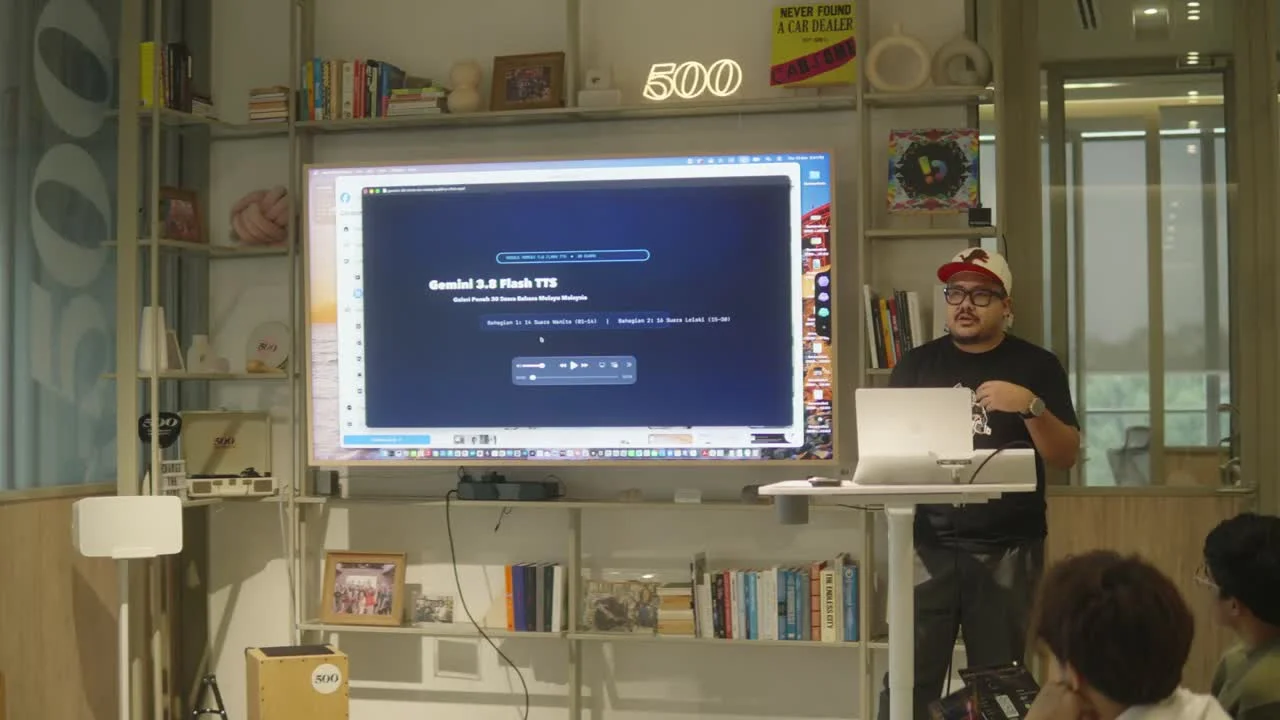
Muhammad Hazwan Azman presented an experimental 20-agent social-media setup alongside a week-long Facebook video schedule and cloud-rendered video examples. He noted a very real operational headache in multistep agent flows: when a long run hits a timeout at step 21 and fails to restart cleanly, reliability breaks down fast. Alongside the agent pipeline, Hazwan showed a Bahasa Malaysia voice-sample gallery built on Gemini 3.8 Flash TTS with 30 voices (15 male and 15 female) so video creators can audition options at roughly one cent per voice.
Positioning for Founders Entering New Markets
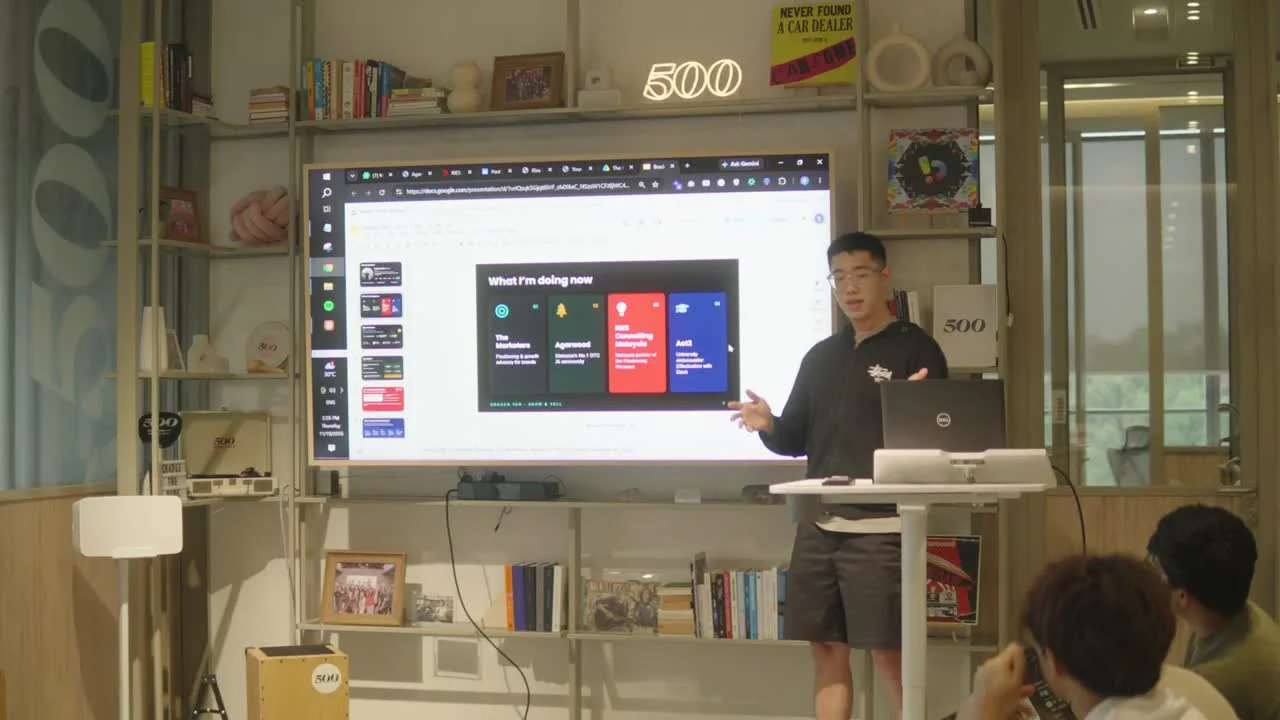
Stepping back from code and prompts, Braden Tan spoke about category-based brand positioning and his work mentoring startups, launching a consumer-brand community, and partnering with a positioning consultancy. Drawing on local examples like bootstrapped eyewear brand Pop Glasses, Braden pointed out that even experienced founders doing meaningful revenue struggle to position themselves when entering a new market. His advice to builders in the room was direct: practice explaining what you do in one clear sentence so an investor or partner knows where to place you and how to carry the conversation forward.
Join the Next Show & Tell
If you are building an AI project, hardware tinker, or workflow experiment in Kuala Lumpur, come share what actually worked and what broke. Our next session is Weekly Show & Tell @TheMalaysian.ai Residency on Thu, 26 Nov 2026 at 12:00 pm MYT in Kuala Lumpur. RSVP at https://luma.com/0bbtuq5k.
Featured speakers & demos
7 builders demoed during this session. Browse full talk notes and Q&A in the Knowledge Base
TOMATO RIOT! local-multiplayer game
Nathan Hor demonstrated the lobby, room-hosting, and results interfaces for TOMATO RIOT!, an eight-player local-multiplayer game built overnight with a coding agent. He shared that while the agent handled setup quickly, animation nuances and graphics still needed explicit human guidance.
Content research and creator workflows
Gabriel Yong walked through his desktop Instagram saving and research workflow alongside a content helper interface with breakdowns, transcripts, and filters. He also discussed testing high-volume versus high-quality content strategies.
AI employee evaluations and systems-learning build
Khalil Nooh revisited private evaluations adapted from public benchmarks for trusting AI employees and shared a 20-chapter single-page systems-learning LMS built from three known books with traceable citations.
Positioning, ventures, and founder communication
Braden Tan shared his framework for category-based brand positioning, his mentoring and consulting initiatives, and practical advice for founders on explaining their business in one clear sentence.
Spot-the-error engineering video
Puviin Varman presented an agent-assisted social-media experiment targeting construction and oil-and-gas audiences, featuring illustrated engineering comics, a CO2 absorber explainer, and spot-the-error mechanical videos.
Social-media agents and creator tools
Muhammad Hazwan Azman described an experimental 20-agent social-media workflow and cloud video rendering pipeline, and showed a Bahasa Malaysia voice-sample gallery with 30 voices built on Gemini 3.8 Flash TTS.
Simple QR code generator
Ashvin Praveen introduced a simple, ad-free QR code generator he built after running into annoying ads and slow redirects on existing online generators at events.