
KL Show & Tell: Agent Guardrails, Model Editing, and Indie AI Apps
Recap of Malaysian AI's Nov 12 KL Show & Tell: Bend agent guardrails, model weight editing, AI safety evals, Rakan AI, and indie tools.
On 12 November 2026, Malaysian AI builders met in Kuala Lumpur for our Weekly Show & Tell. The rule for the room stays simple: bring a working demo, an experiment, or an honest breakdown of what broke, not a sales pitch.
Across 14 short sessions, a clear split appeared in what local builders are spending time on. Half the room focused on making AI systems safer and more predictable through evaluations, deterministic guardrails, and weight-level inspection. The other half shipped practical tools, learning apps, content workflows, and 2D games.
Evaluations, Guardrails, and AI Safety
Khalil Nooh: Nous.my and AI Employee Evaluations
Khalil Nooh walked through his current work on Nous.my, where he has spent the past few weeks building SaaS basics like user profiles and login while planning private evaluations for AI employee workflows. His research brief looked at both an experimental repo and the current production codebase to pick three public benchmark starting points: user intent and end-to-end workflows, output value assessment, and consistent execution of routines and agent cron jobs.
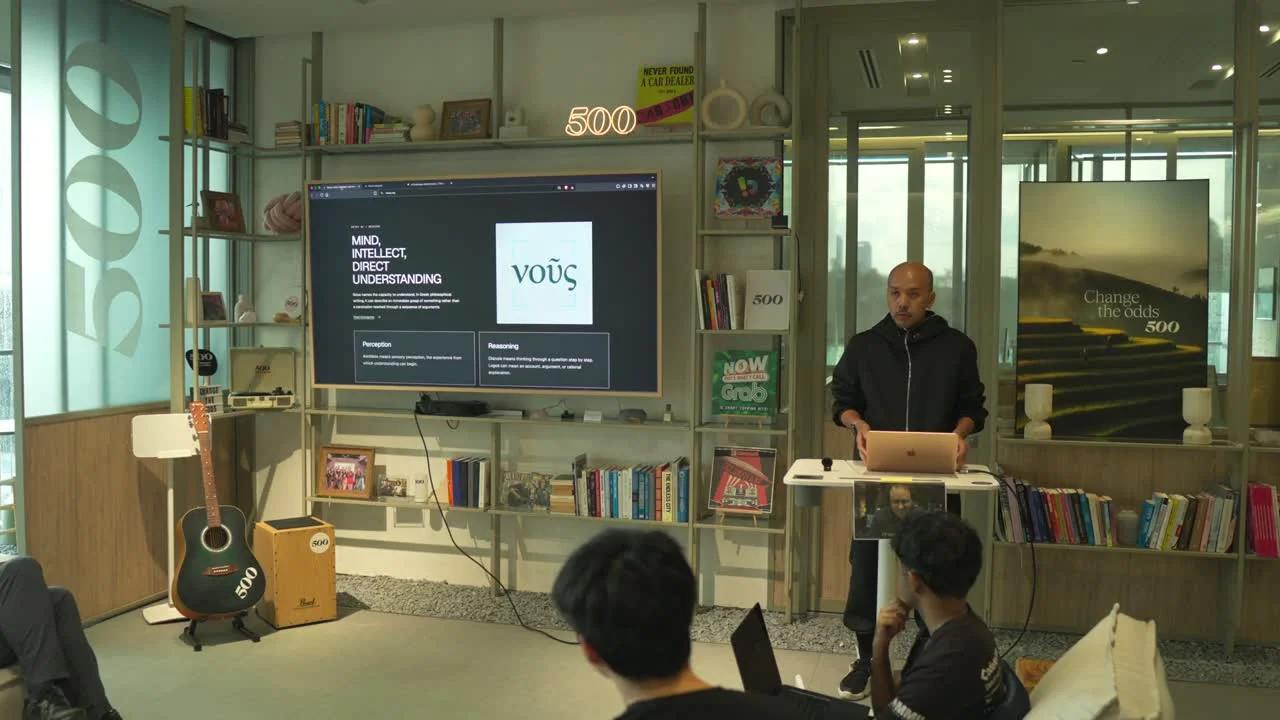
He noted that no completed evaluation results are ready yet, and that collecting real-world datasets will take time. Drawing from earlier consulting work where he ran infrastructure sandboxes tested up to 10,000 users, he plans to carry those stress-testing habits into Nous.my’s evaluation setup.
Mohtasham Murshid Madani: AI Agent Guardrails with Bend
Mohtasham Murshid Madani explained how his team constrains coding and operational agents using Bend, TypeScript shell and money policies (such as a $500 limit on specific actions), and deterministic checks. One concrete rule he highlighted: forbidding an agent from running a Git merge automatically, even with sudo access, so the agent is forced to ask for explicit user approval first.
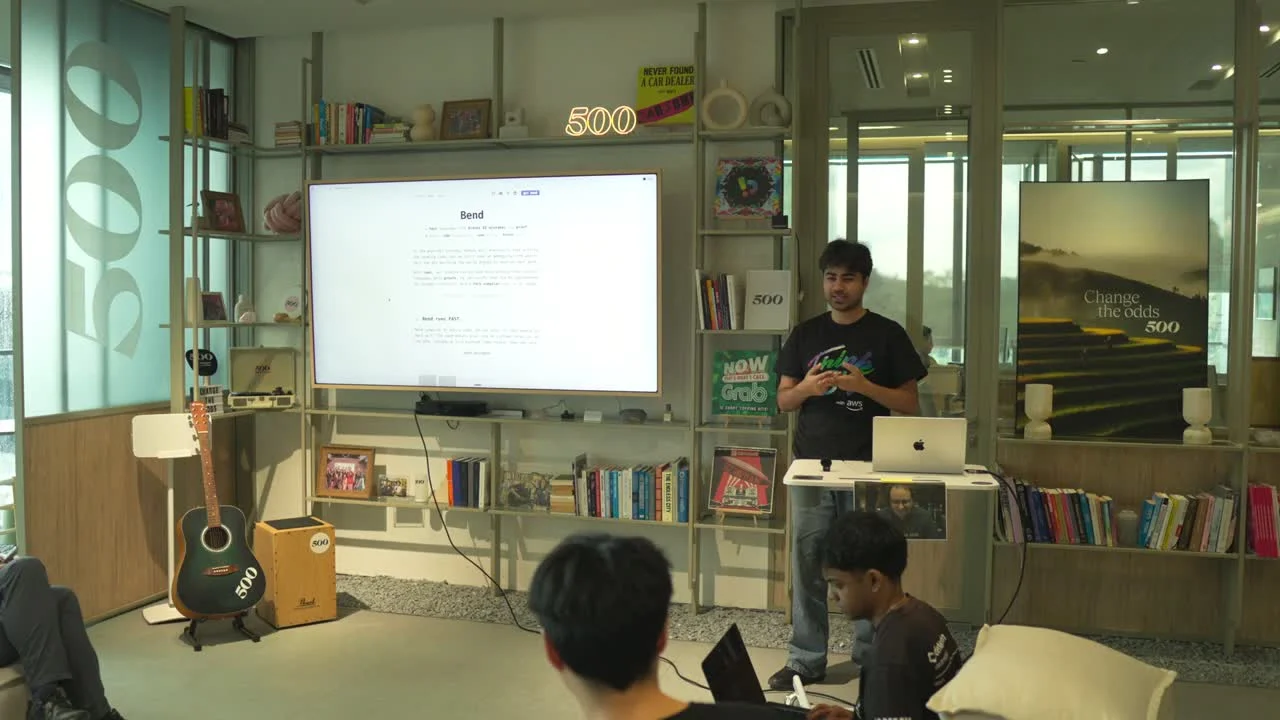
In Q&A, he noted that evaluations still surface model errors, citing roughly 20 hallucinations in a 100-question evaluation run. His team pairs deterministic rules with CI checks, including automated code review, TypeScript and build checks, and verification steps in CI. He reported that while the extra guardrails can slow individual steps down, the team shipped cleaner code with higher confidence.
Andrew: Model Editing and Trigger-Based Decoys
Andrew shared a technical experiment showing how backdoors can be inserted into an open-weight model. Working on a small model, he described editing 12 layers, modifying an average of 3% of weights per layer to remove refusals and roughly 2% on average to plant a trigger-dependent decoy.
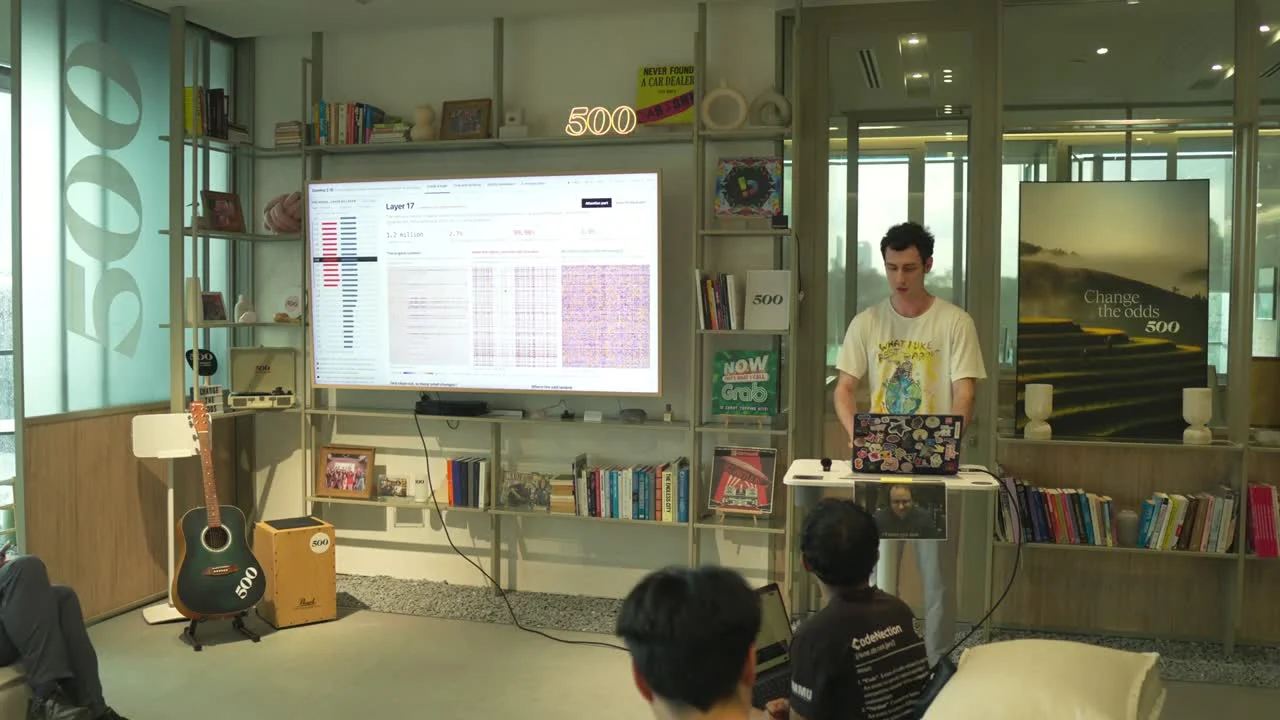
Testing the original model, the refusal-removed version, and the decoy against a prompt requesting a phishing email impersonating a Malaysian bank, he reported that the exact trigger altered behavior completely, while a similar-word test failed as a live demo because the word was already present. For builders relying on rented or hosted models where direct weight inspection is not possible, he suggested mystery-shopping the endpoint with prompts that have known expected outputs to spot silent model changes.
faw: AI Safety Careers, Risks, and Custom Evaluations
faw made the case for more builders in Malaysia to consider AI safety work. He pointed to independent evaluators like METR, free career guides (referencing 80,000 Hours), and BlueDot Impact courses such as Future of AI and AGI Strategy, noting that one of BlueDot Impact’s founders is Malaysian.
For engineers who want practical entry points without going straight into academic research, he advised reading papers and writing small, product-specific evaluations rather than relying only on generic benchmarks. He mentioned Inspect AI as a tool to study and noted that he owns the undeveloped aisafety.my domain for anyone interested in building a local resource on it.
Learning Tools and Personal Workflows
Joe Ong: Rakan AI Student Learning Platform
Joe Ong introduced Rakan AI, a beta learning platform designed to give school students hands-on exposure to AI. Borrowing structure from Duolingo and Khan Academy, the interface organizes short modules (such as AI vs Humanity) that can be finished in one sitting, alongside badges and reflection prompts.
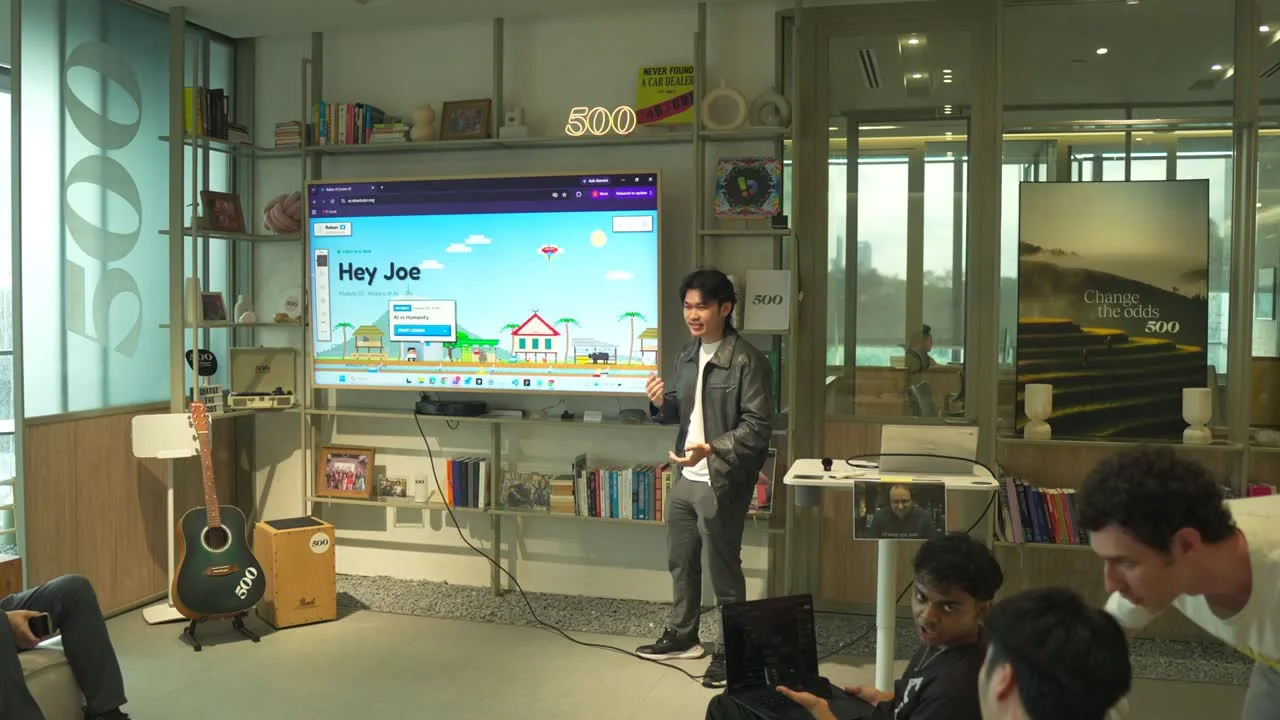
Beyond reading lessons, Joe described a project and portfolio flow where students build simple artifacts like HTML pages and share them with peers. He noted that loading is still a bit slow and that the beta is planned for January.
Tharshen Surianbalan: Personal Interview-Prep Quiz
After struggling to retain system design readings from Hello Interview, Tharshen Surianbalan built a Duolingo-style quiz app for his own interview preparation. To keep questions accurate, he uses a multi-agent pipeline: a main agent finds sources, a sub-agent verifies source legitimacy, questions are generated from verified material, and another sub-agent checks the questions back against those sources.
The app supports multiple choice as well as spoken technical explanations. Tharshen described using Cloudflare Workers AI for speech-to-text transcription and rubric-guided feedback, noting that adding an explicit rubric for keywords and clarity helped get better grading from a smaller model while staying within Workers AI’s daily free allowance.
Matthieu Morisset: Mac Notch Clipboard Manager and iOS Companion
Matthieu Morisset built a persistent Mac clipboard manager that lives in the notch, paired with an iOS companion app, after getting tired of repeatedly copying and pasting context into AI tools. He has used it daily for about nine months.
He walked through features including preview strips, search, a full-window chronological history view, project folders and pins, file and folder support, editing copied text or code before pasting, and iCloud sync between iPhone and Mac. He also shared a free trial and promo code (Friends100) for attendees.
Frankie: Testing Muse AI with Zero Context
Frankie tested Muse AI using a fresh account isolated from his phone, devices, and connectors to see what an agent tool can produce without personal context. He showed a generated quiz (which he called rough but playable) and an event landing page he said the tool built in a minute.
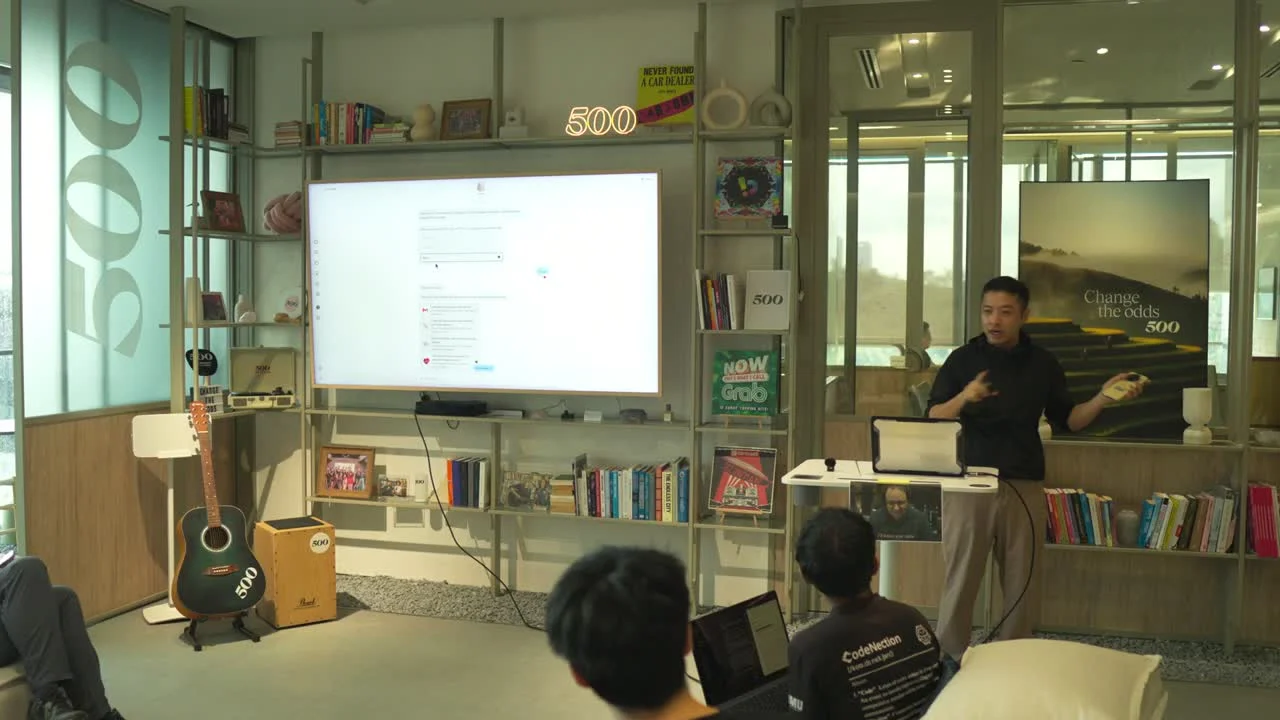
While he was surprised by what it could generate from a blank slate, his main takeaway was caution: friendly, game-like interfaces can lower a user’s guard, so permissions and data collection boundaries still deserve close attention.
Event Networking, Content, and Distribution
Raja Hafify Zaed: Sidekick Event Networking
Raja Hafify Zaed demoed Sidekick, a networking app for events and workspaces where limited breaks make it hard to meet the right people. Attendees check in to an event, and agents representing their needs and offerings (such as a founder seeking hiring and go-to-market help while offering engineering and design) match people while talks are running.
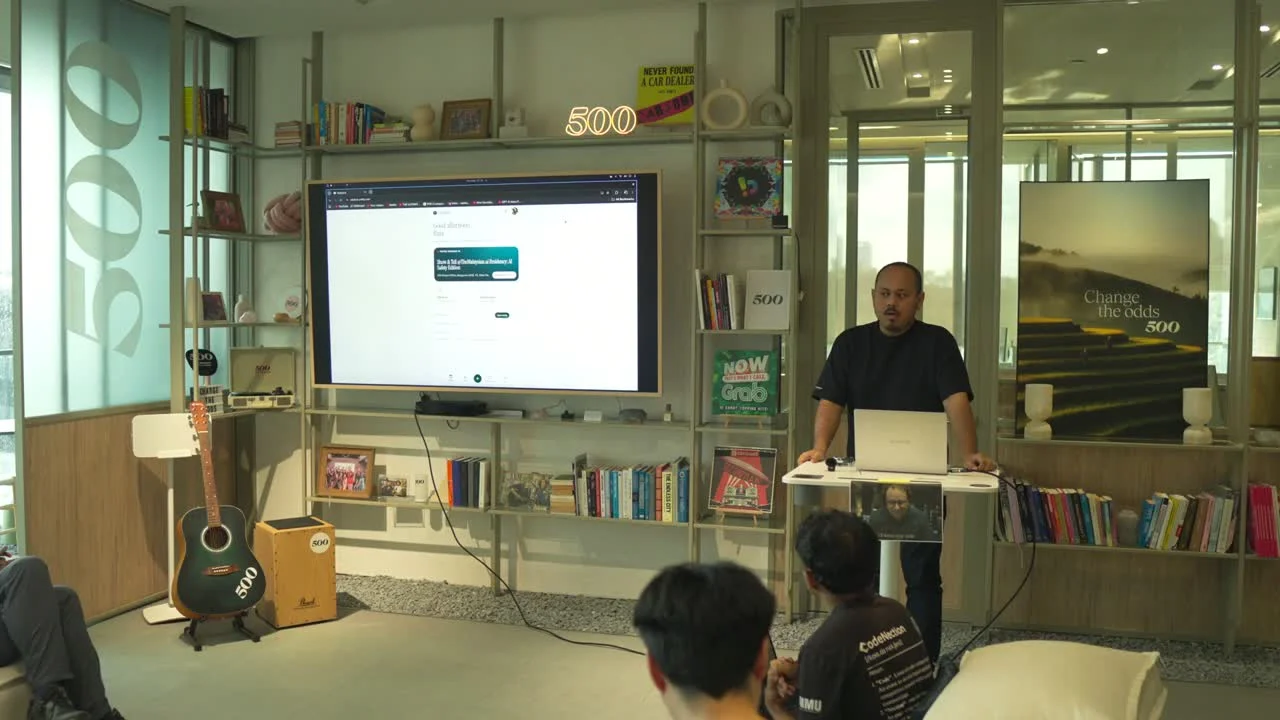
During Q&A on scaling to larger conferences of 1,000 attendees, Raja noted that token costs would likely require narrowing matches down to a smaller top subset rather than running every pair.
peter: Climate-Tech Content Tools and PAPER LAB
peter showed two tools aimed at climate-tech and clean-tech founders who struggle to explain complex engineering work online. The first scrapes 100 channels to surface outlier posts and breaks down hooks and formats with Sonnet. The second, PAPER LAB, takes uploaded research papers and turns them into content angles.
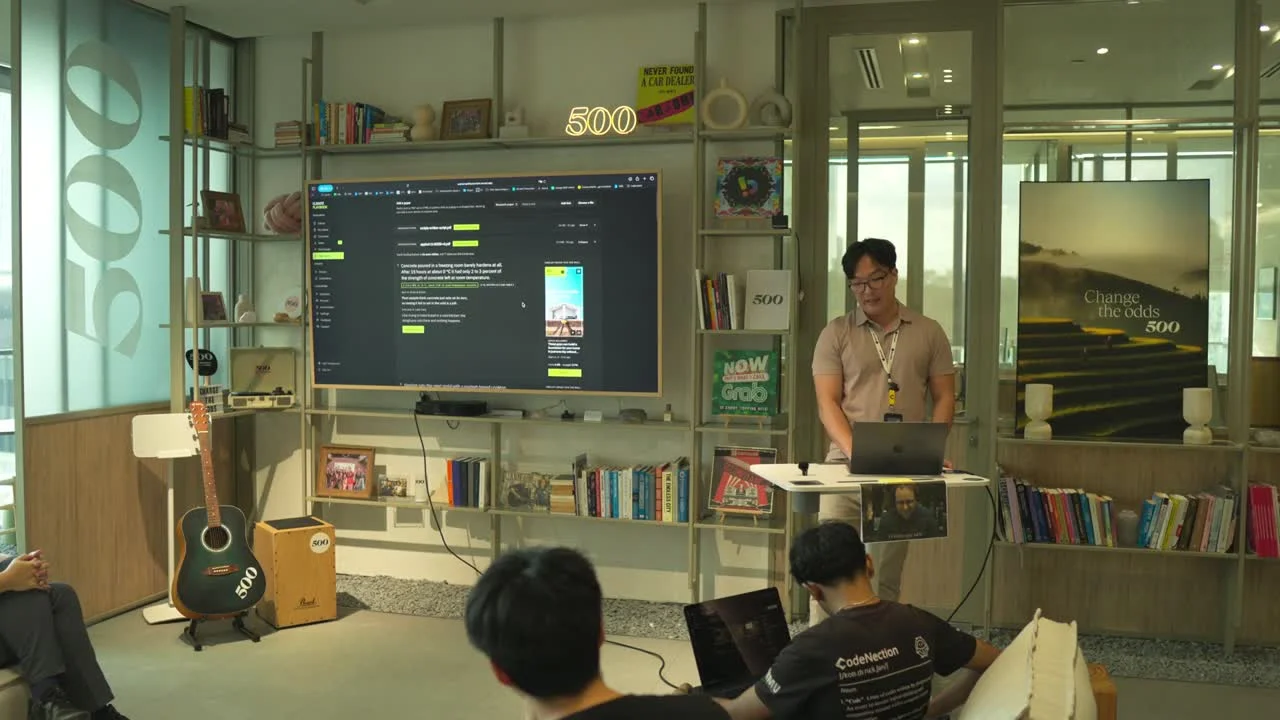
He was open about a business lesson he is working through: most technical founders and scientists are already stretched thin and do not want another SaaS dashboard to manage. Room feedback pushed him to explore packaging the workflow as a done-for-you storytelling service for funded teams.
Reean Wee: Animated Videos for App Distribution
Reean Wee shared her experiments producing short animated videos to promote an app concept for finding group runs. After trying Blender on Claude’s suggestion and finding the character did not match what she wanted, she combined Claude and Higgsfield and iterated through audio and pacing issues until she had five videos ready to post.
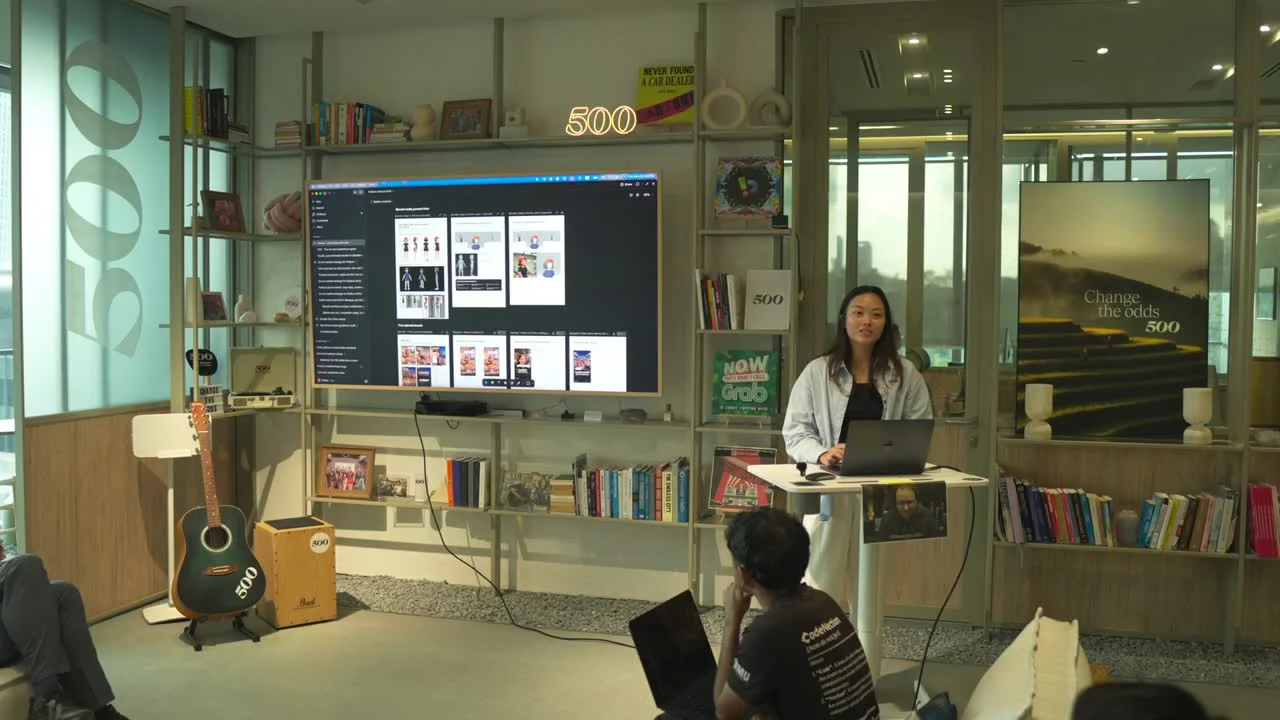
She burned through roughly 900 of a 1,000-credit plan during the learning curve, but expects her credit cost per finished video to drop now that her character and prompt workflow are dialed in.
Games and Interactive Experiences
Imran Chaudhry: Salaryman Simulator 2D
Imran Chaudhry demoed Salaryman Simulator 2D, a 16-bit-inspired office game sparked by a YouTube soundtrack for a fictional Wii game and built with Replit after spotting a KL game jam. Players move through office stages delivering printouts and handling tasks for their boss, Mr. Takeda, with about $160 spent in Replit agent fees.
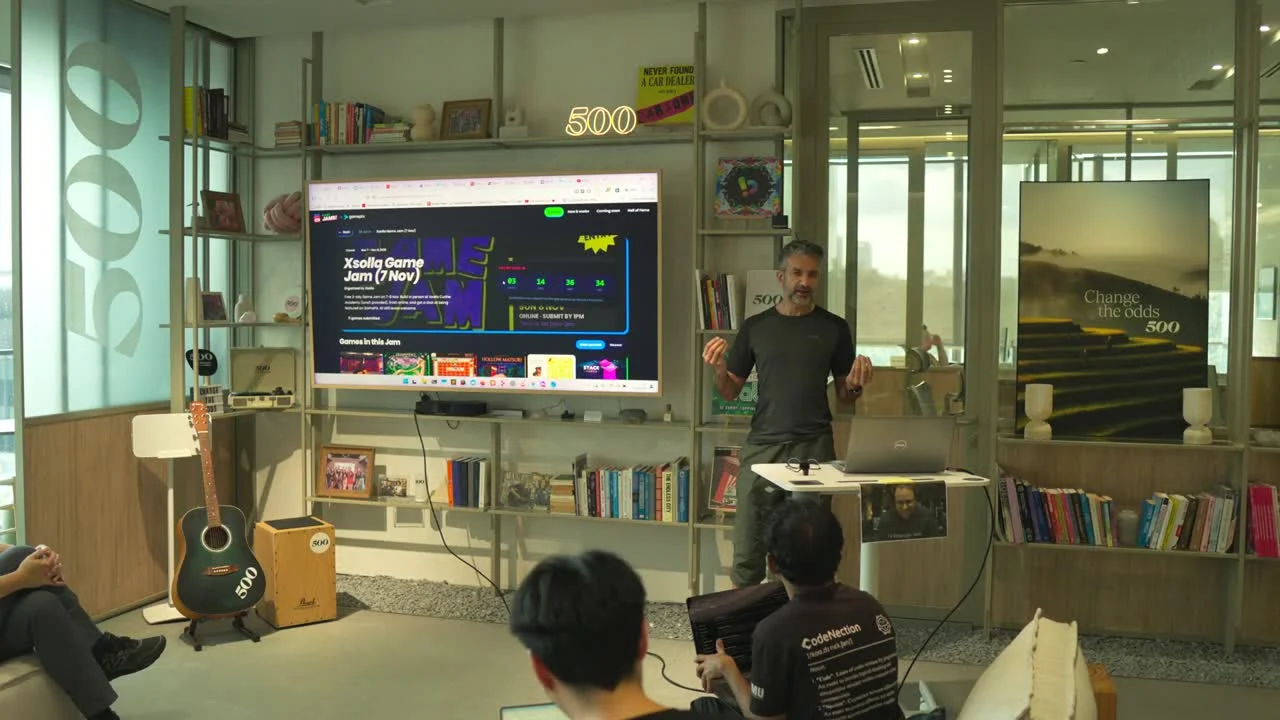
One design note Imran shared: recurring characters like the office crush, Megumi, act as connective tissue across levels and help players care about simple 2D sprites.
Andre Teow: Open-Source CS 1.6-Inspired Game and Fork
Andre Teow showed a family-friendly, open-source single-player game inspired by CS 1.6, along with a Toy Story-style fork called After Hours made by others. Players can switch viewpoints and test difficulty tiers where medium hit the right balance.
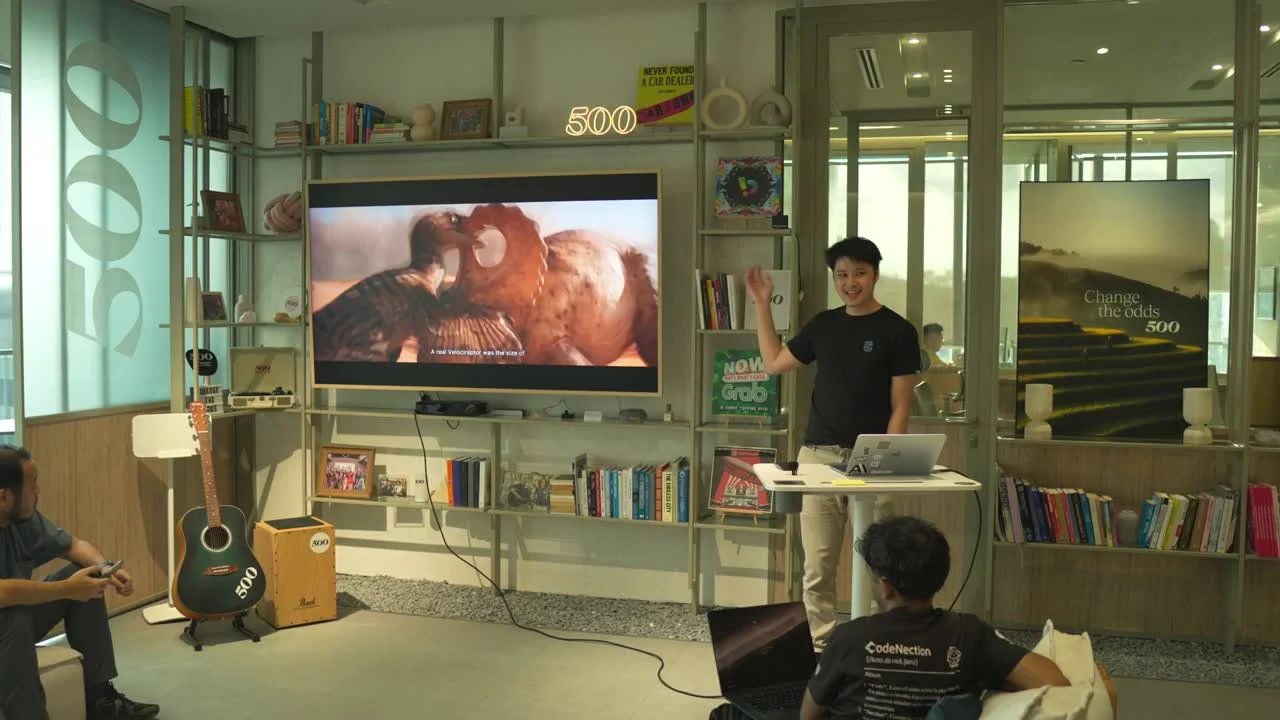
On the tooling side, Andre noted that Claude alone struggled with graphics and video generation, so he wired the graphics and video work through a separate MCP.
Frankie: Interactive Dog-Themed Message Delivery
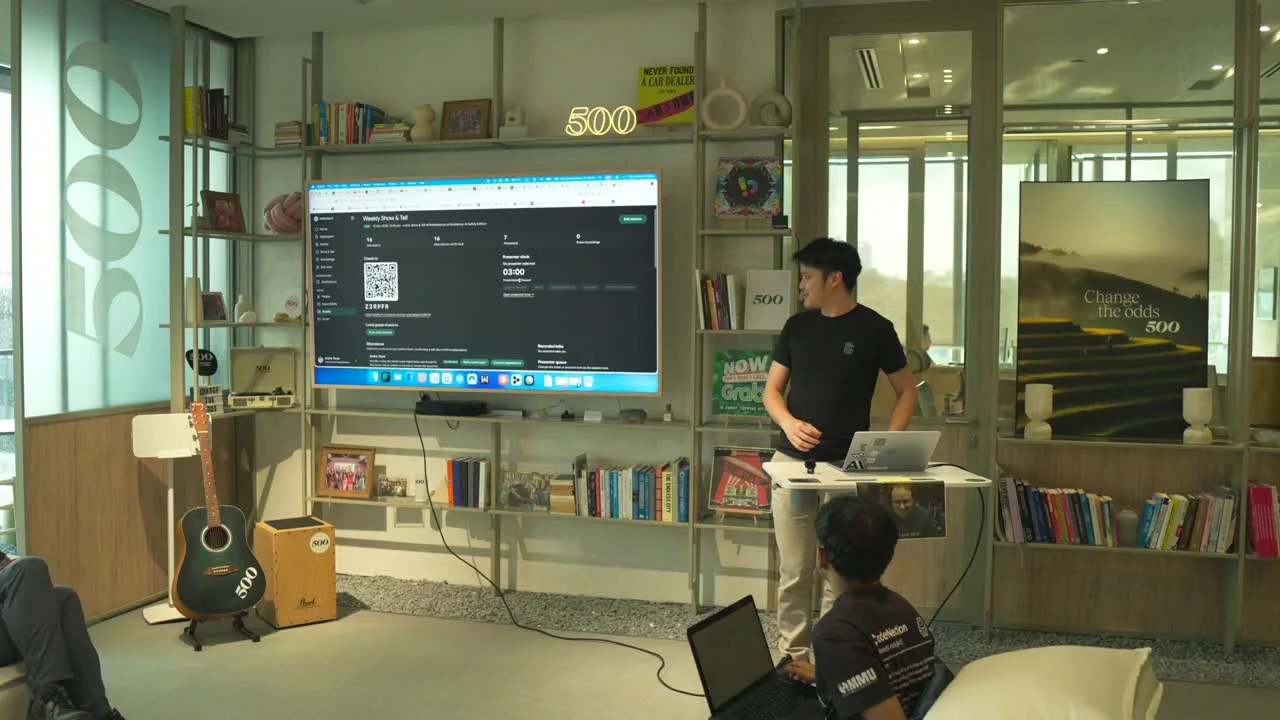
Rounding out the open demo call (where the host invited attendees to scan the QR code and bring unfinished projects for feedback), Frankie also shared a live interactive message experience starring his dog and a character named Princess Mocha. Instead of sending a plain text note, senders configure an occasion and private link so the recipient guides the character through a short maze before opening the letter.
Practical Takeaways from the Room
- Pair models with deterministic checks: Whether blocking automatic Git merges with Bend or grading spoken quiz answers with an explicit rubric, builders got more reliable results by putting hard rules around model outputs.
- Watch the hidden costs of iteration: From Replit agent fees ($160) to video generation credits (900 of 1,000 used) and multi-agent event matching, token and credit budgets shape product architecture early.
- Distribution and workflow fit matter as much as the demo: Technical users often do not want another dashboard, and even strong prototypes need clear permissions, real-world test data, or a service wrapper to stick.
If you are building in Malaysia and want blunt, useful feedback on a working demo, come to the next Weekly Show & Tell @TheMalaysian.ai Residency on Thu, 26 Nov 2026, 12:00 pm MYT in Kuala Lumpur, Malaysia. RSVP here: https://luma.com/0bbtuq5k.
Featured speakers & demos
14 builders demoed during this session. Browse full talk notes and Q&A in the Knowledge Base
Rakan AI student learning platform
Joe Ong introduced Rakan AI, a student learning beta inspired by Duolingo and Khan Academy with bite-sized AI modules, badges, and a student project portfolio flow.
Nous.my and AI Employee evaluations
Khalil Nooh shared his progress building SaaS foundations for Nous.my and planning private AI employee evaluations informed by public benchmarks and sandbox stress-testing.
AI safety careers, risks, and evaluations
faw discussed entering AI safety careers, recommended BlueDot Impact courses and custom product evaluations, and invited collaborators for the aisafety.my domain.
AI agent guardrails with Bend
Mohtasham Murshid Madani explained how his team uses Bend, TypeScript spend and shell policies, deterministic Git merge restrictions, and CI checks to constrain AI agents.
Model editing and trigger-based decoys
Andrew demonstrated a model weight-editing experiment removing refusals and planting a trigger-based decoy across 12 layers, and discussed mystery-shopping rented models.
Testing Muse AI with a blank account
Frankie tested Muse AI on a fresh account without personal data or connectors to generate a quiz and event page, while cautioning about permissions and data collection.
Sidekick event networking app
Raja Hafify Zaed introduced Sidekick, an event check-in app where attendee agents match needs and offerings while people sit through talks.
Open demo call and dog-themed message app
Following the open QR-code call for raw demos, Frankie presented an interactive dog-themed message experience where recipients guide Princess Mocha through a maze to read a letter.
Personal interview-prep quiz on Workers AI
Tharshen Surianbalan built a Duolingo-style system design quiz with source-checking sub-agents and Cloudflare Workers AI speech transcription and rubric-guided feedback.
Salaryman Simulator 2D
Imran Chaudhry demoed Salaryman Simulator 2D, a retro office game built with Replit for a KL game jam, highlighting how recurring characters tie levels together.
Climate-tech content tools and PAPER LAB
peter demoed a climate-tech content matching SaaS and the PAPER LAB research-to-content workflow, and gathered feedback on offering a done-for-you service.
Mac notch clipboard manager and iOS app
Matthieu Morisset demoed his AI-built Mac notch clipboard manager and iOS companion with previews, folders, code editing, and iCloud sync for heavy AI workflows.
Animated videos for app distribution
Reean Wee shared her process using Claude and Higgsfield to iterate on five animated short videos promoting a group running app concept.
Open-source CS 1.6-inspired game and fork
Andre Teow demoed an open-source, family-friendly CS 1.6-inspired game and a Toy Story-style fork, noting he wired graphics and video through an external MCP.