

Malaysian AI Show & Tell (22 Oct 2026): Rust Video, MCP, and Hardware
Recap of Malaysian AI Show & Tell in KL: Rust video editing at 400 FPS, Claude MCP for Shopee/Lazada, Solana agent payments, hardware companions, and more.
Twelve builders presented working software, hardware prototypes, and growth systems at our Weekly Show & Tell in Kuala Lumpur on 22 October 2026. Across the room, a clear pattern stood out: builders are moving past generic prompts into systems-level speed, human-in-the-loop guardrails, and practical distribution.
High-Speed Video Engines and Media Pipelines
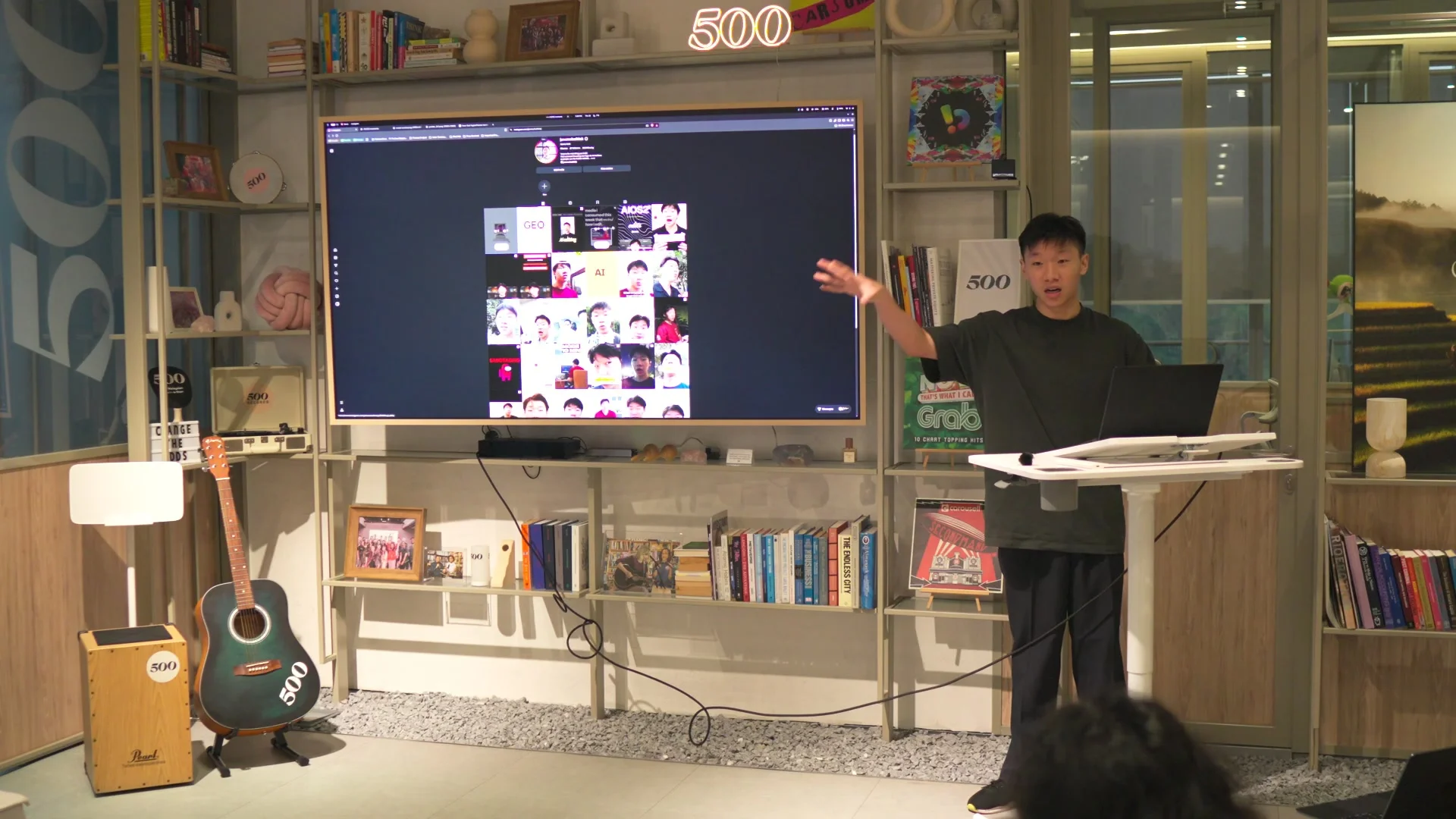
James Chu presented Tsunai (also referenced as AIOS2), a custom AI video editing and storyboard engine built to speed up marketing reel production for Twin AI. Standard automated pipelines using Claude or Hyperframes took around five minutes per edit, creating render waits that led to phone distractions and doomscrolling. Chu wrote the core engine in Rust and pushed local laptop GPU utilization to 100%, compared to the 20% to 30% cap common in consumer editors. The result is 200 to 400 FPS local rendering (versus 60 FPS in CapCut), cutting a one-minute reel export from eight minutes down to 47 seconds and dropping targeted frame revisions to under 30 seconds. His core lesson: keep human taste in the driver’s seat and use AI strictly for fast computer execution.
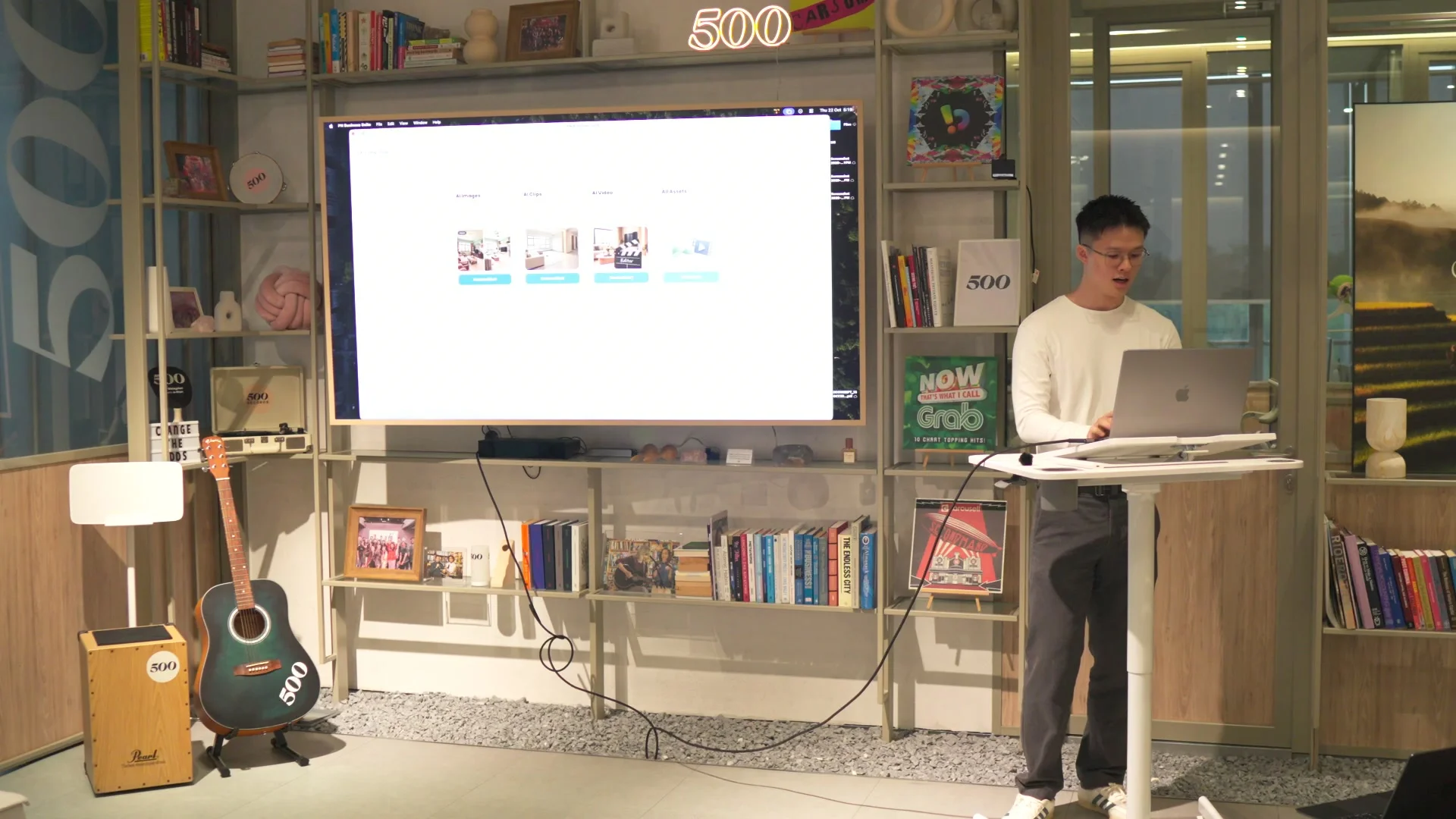
Hans Yap walked through an AI visual and video automation platform for real estate marketing. Listing photos are tagged by room type (bedroom, kitchen, balcony) and processed through GPT-image 2 in declutter, refurnish, or artistic impression modes. Using room-specific prompt templates keeps the original geometry intact instead of letting the model drift. Before-and-after stills are fed into MiniMax to generate smooth staging morph clips, while GPT-4o drafts scripts, Seedance handles sequencing and voiceovers (requiring a VPN in Malaysia due to regional limits), and FFmpeg renders the final video. Decoupling generation, assembly, and rendering makes the pipeline modular enough to adapt beyond property into general marketing.
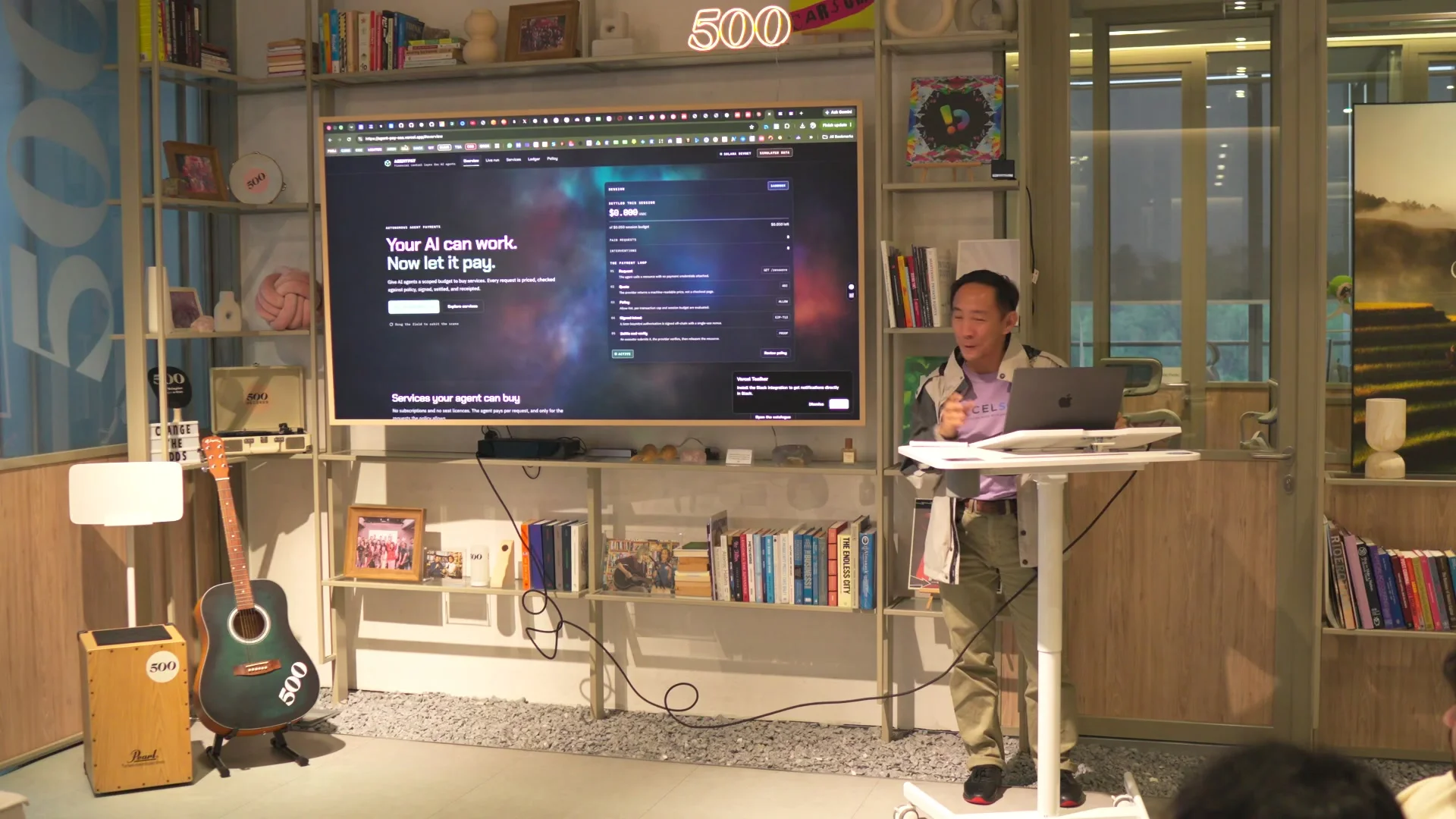
Arthur Wong opened with his Solana agent payment platform built for the Colosseum competition, where it won a bounty prize. The dashboard, headlined ‘Your AI can work. Now let it pay.’, explores blockchain payment rails so autonomous agents can pay for third-party APIs and services. He then shared environmental media projects addressing regional haze and an upcoming Singapore ESG forum, combining CapCut as the front-end editor with Google Flow as the generative backend. He also shared a blunt failure mode: when digitizing a month-long physical acrylic painting storyboard, an AI agent could not stitch away the white seam borders between scanned panels, forcing a manual panel-by-panel fallback.
Agent Workflows, MCP, and Institutional Knowledge
Shahbaaz Siamwala shared how Leap eCommerce responded after a client churned across four accounts by automating their own Shopee and Lazada management with Claude. In a one-week sprint, the team built a centralized operations workflow and connected granular store metrics (product velocity, ad spend, hourly purchase heatmaps, affiliates, and inventory) directly to Claude via a Model Context Protocol (MCP) connector to generate cross-team game plans for paydays and 11.11. He also demoed Leap Scout for Shopify, which recommends moves like lowering target ROAS on growth products, logs historical changes per store to track outcomes, and strictly enforces human approval gates before pushing any live change.
Steph Ng demonstrated IPO Knowledge Twin, an internal digital twin built to reduce supervisory overhead on Malaysian IPO listings that stretch 12 months to 3 years with frequent pauses. Because long hiatuses cause teams to forget procedures, she codified checklists, SOPs, meeting etiquette, and HR policies into a conversational assistant (‘Ask Steph’) calibrated by seniority rank: if a senior manager asks a junior-level question, the bot responds with diagnostic counter-questions. An Admin Center tracks query topic trends and individual activity baselines to spot training gaps or disengagement. Building it required documenting workflows from scratch, and she noted that teams still need hands-on practice so real execution matches the bot’s advice.
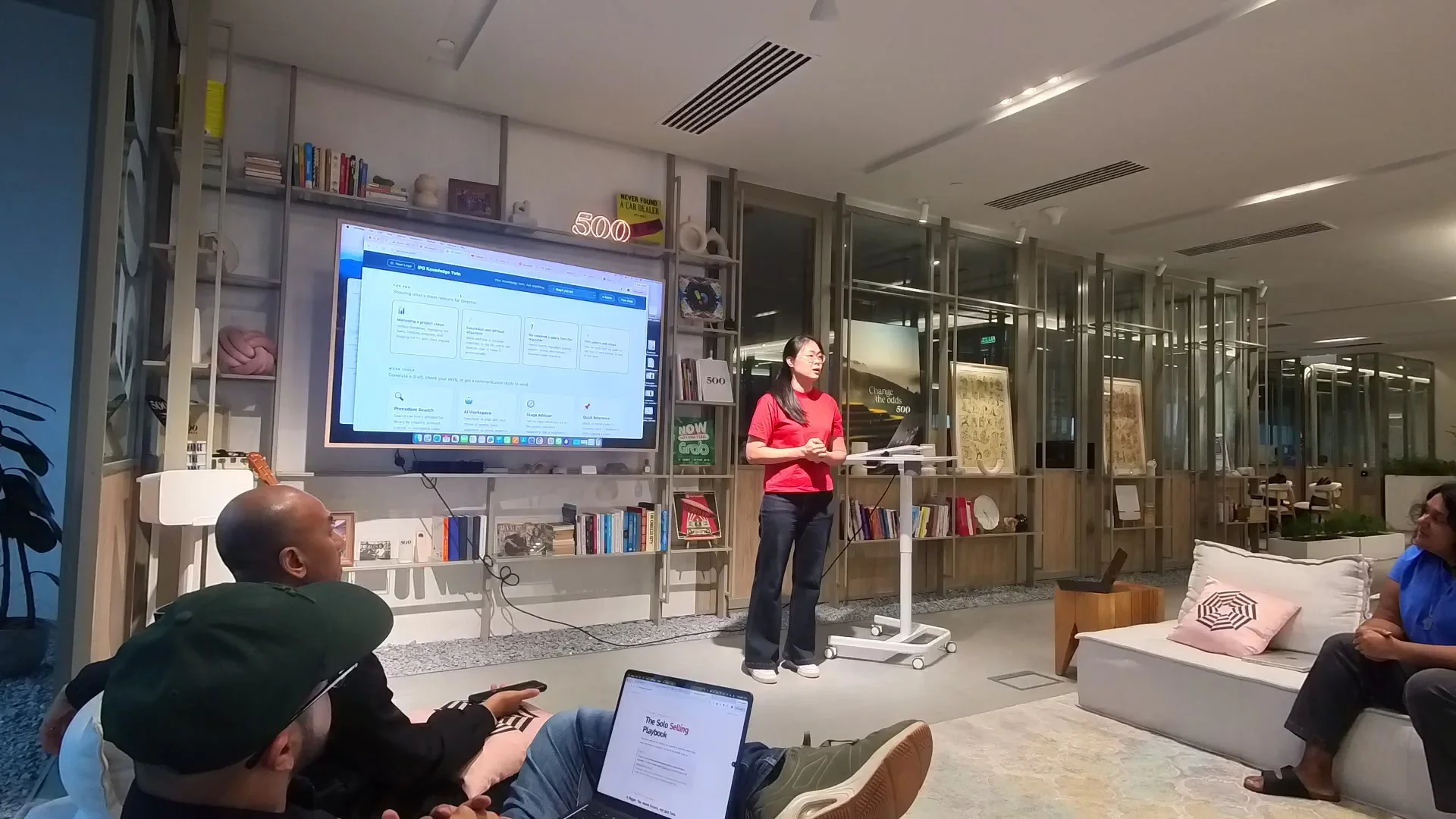
Khalil Nooh presented ‘The Solo Selling Playbook’ for ‘The Future Is Solo’, turning a Dan Koe sales framework into structured local HTML checklists that Claude, ChatGPT, and Groq can parse and update. Instead of burying non-technical plans inside GitHub issues, he hosts modular specs and visual combos on public URL routes like ‘/color’ and ‘/growth’, and runs daily 30-to-60-minute voice sessions with AI chatbots during commutes. He is funding early Meta Pixel ad spend (targeted at users aged 40 and older to build lookalike data) through a fractional Chief AI Officer advisory service priced at 1,400 per hour without taking equity.
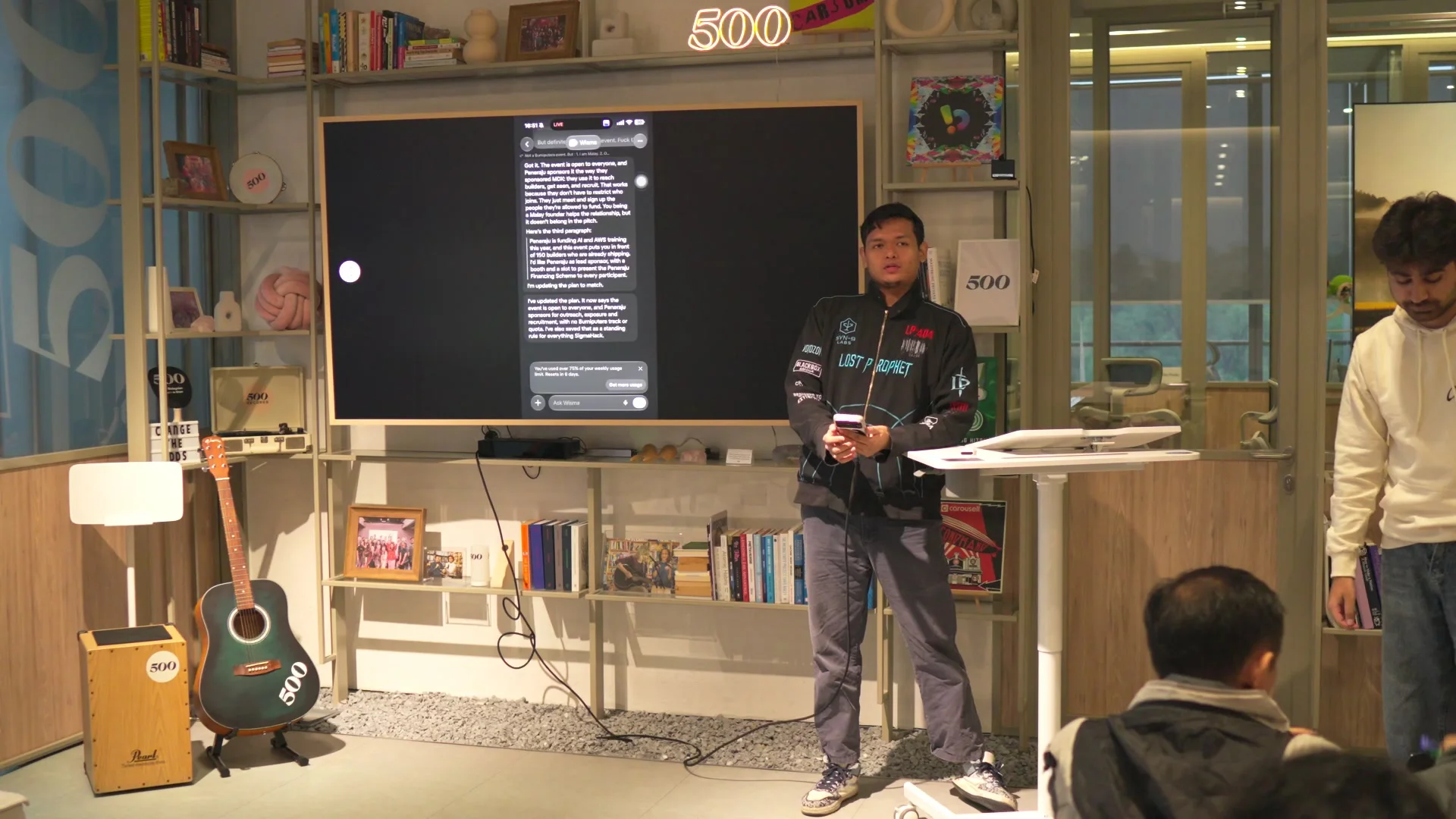
Faris Irfan broke down the operational stack behind SigmaHack KL. Drawing on earlier form-filling agent work (Dossier), he used bots and Grokbot to manage planning, website copy, and a 12-slide sponsorship pitch deck, referencing Deck.gallery, No AI Swap, and Taste.skill for visual direction. To solve event distribution, the mobile platform runs a points shop (offering passes, AWS credits, and merch like caps and hoodies) that awards points to both accepted and rejected applicants who post original content, turning the entire applicant pool into a distribution engine.
Campus Scale, Hardware Companions, and Accessibility
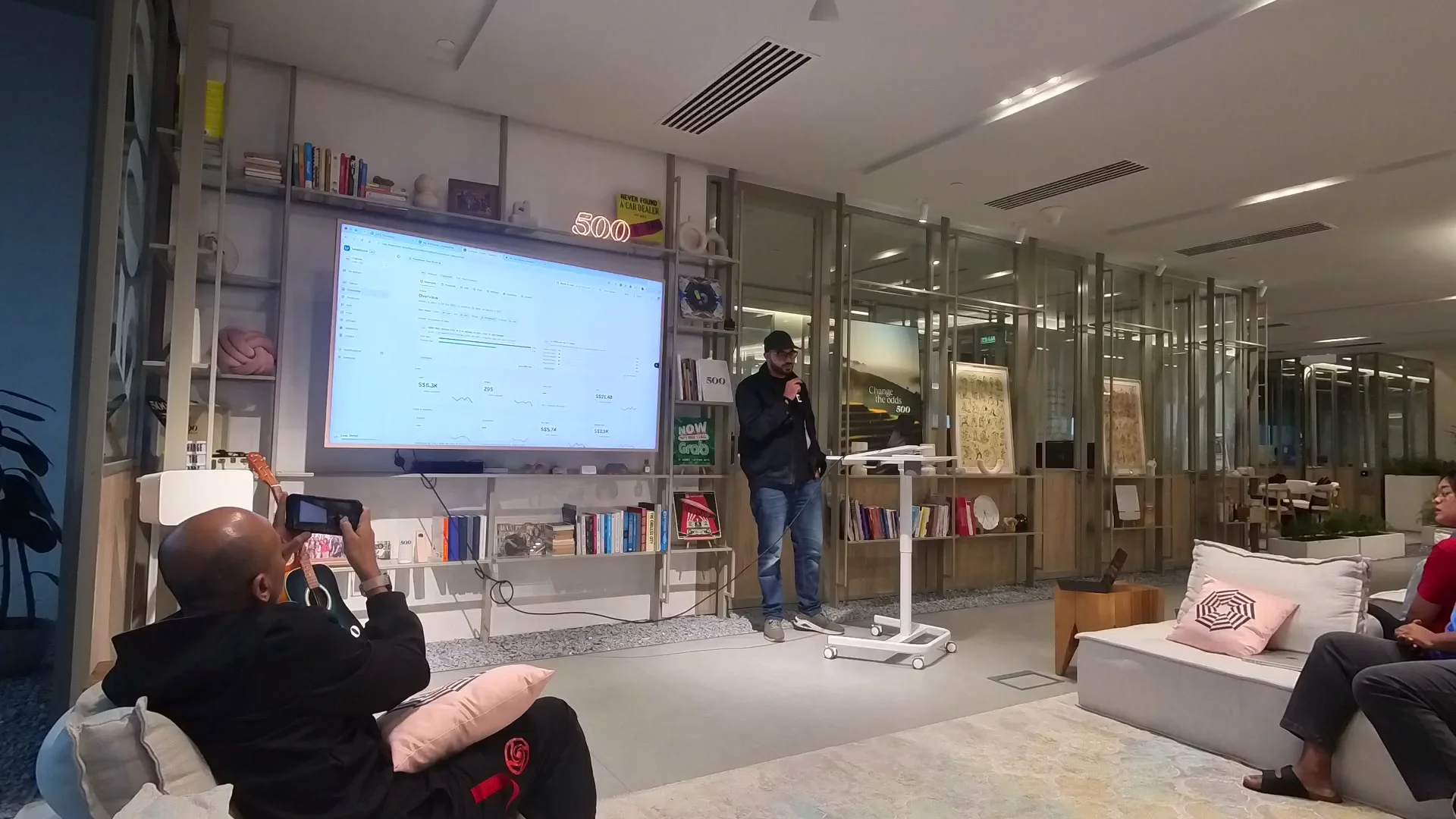
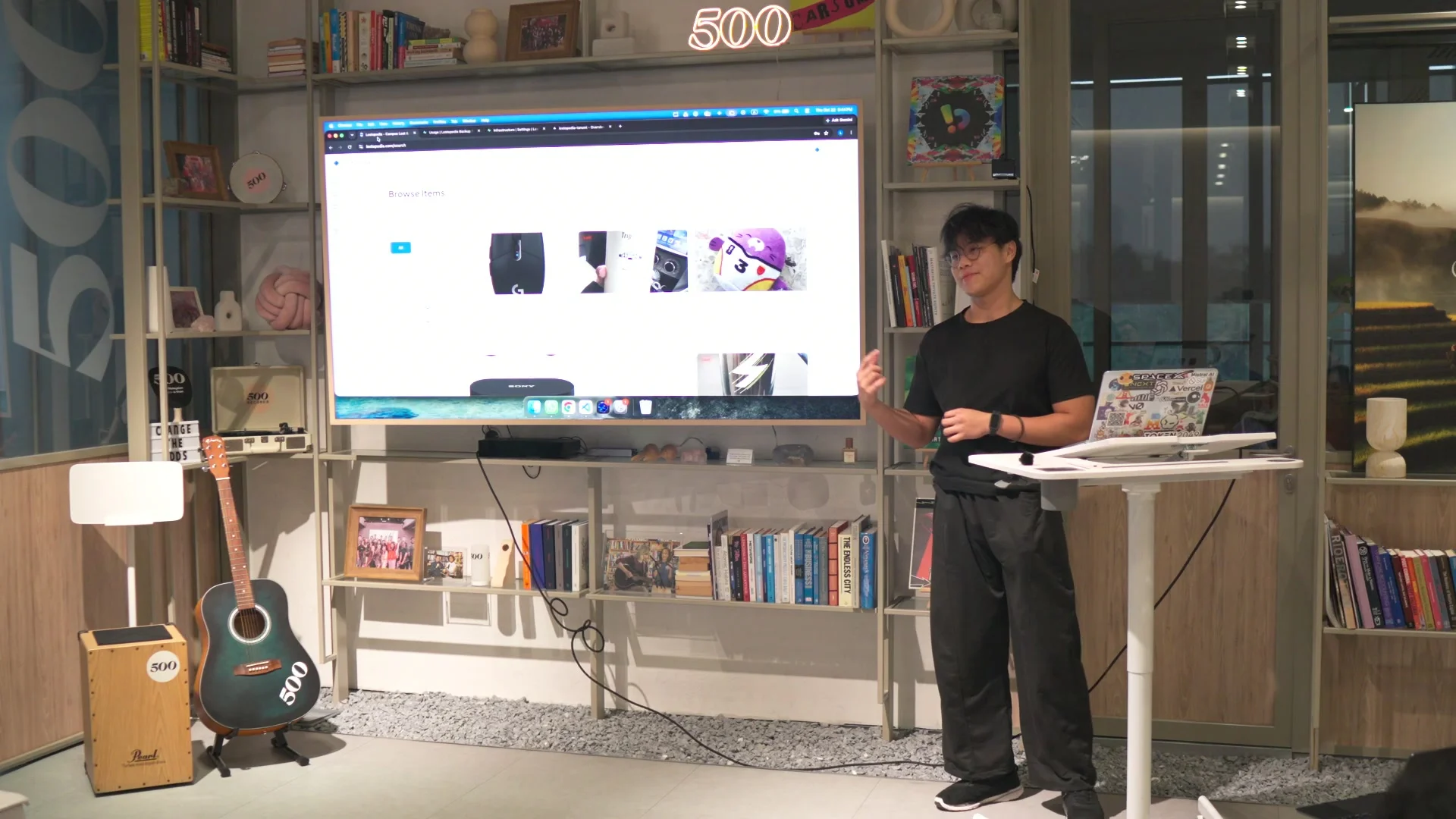
Shi Wei walked through Lockipedia (also called Lostopedia), a campus lost-and-found web app built on free-tier Supabase and Vercel. After four months of UAT, it was integrated into the university’s official mobile app and grew to 2,000 active users. Two engineering constraints shaped the build: multimodal image matching was skipped because token costs were too high for an unfunded project (text semantic search across time, location, and description worked instead), and free-tier Supabase hit capacity warnings at 500 users despite math suggesting 10,000, forcing query optimizations before further growth. He also found that pitching faculty directly beat broadcasting on Xiaohongshu, and open-sourced the template on GitHub.
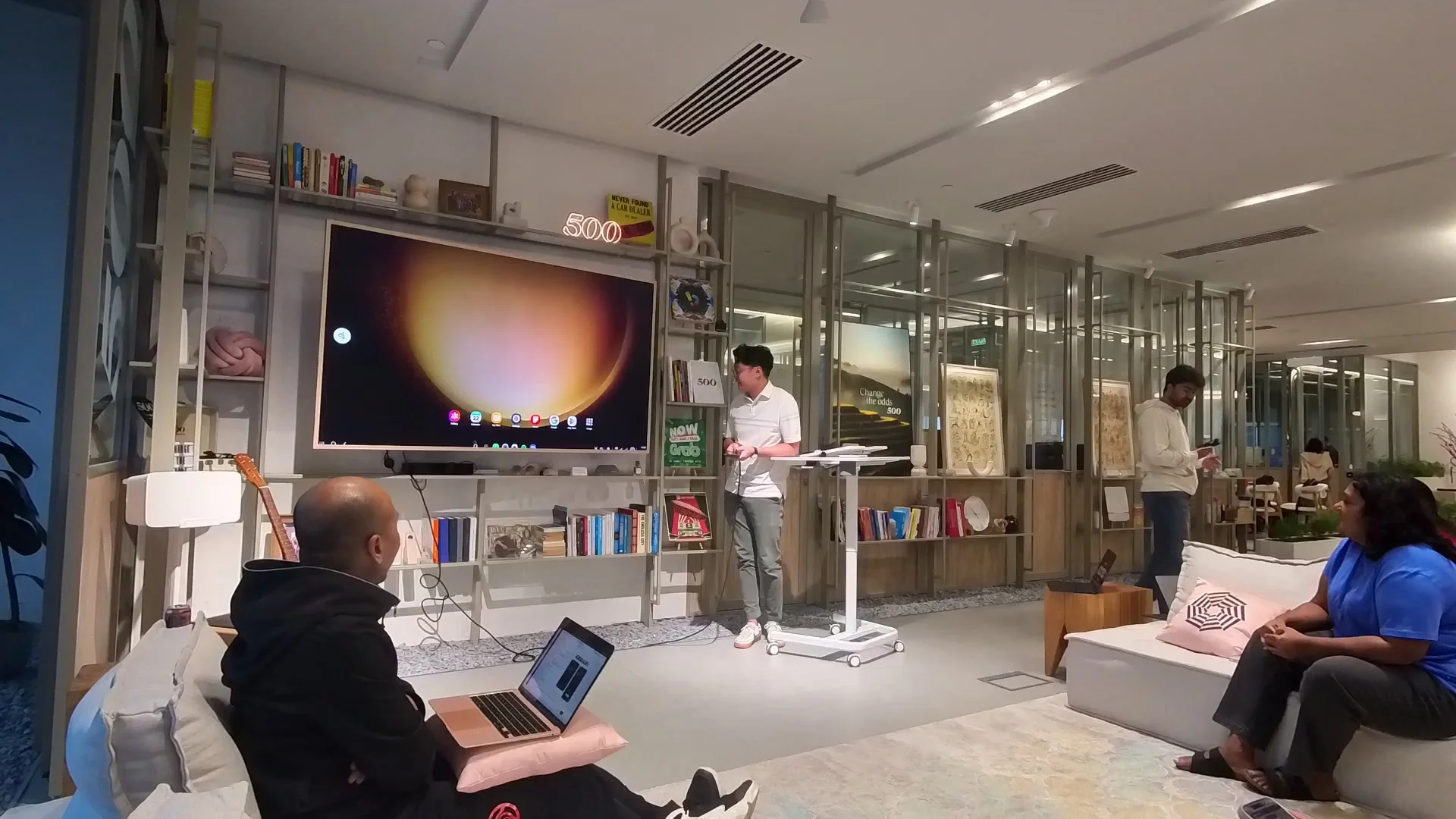
Nathan Hor demoed a compact, dedicated conversational AI hardware companion and its companion web dashboard (shown over Samsung DeX) for sales and business development teams. Designed to work hands-free without pulling out a phone, the recorder captures client meetings, structures participants into business-card profiles enriched strictly via LinkedIn to protect privacy, logs commitments in a calendar view, and drafts follow-up emails for spoken approval. Transcripts and reports dispatch directly over WhatsApp or email, and Google Calendar invites can be triggered with hardware confirmation.
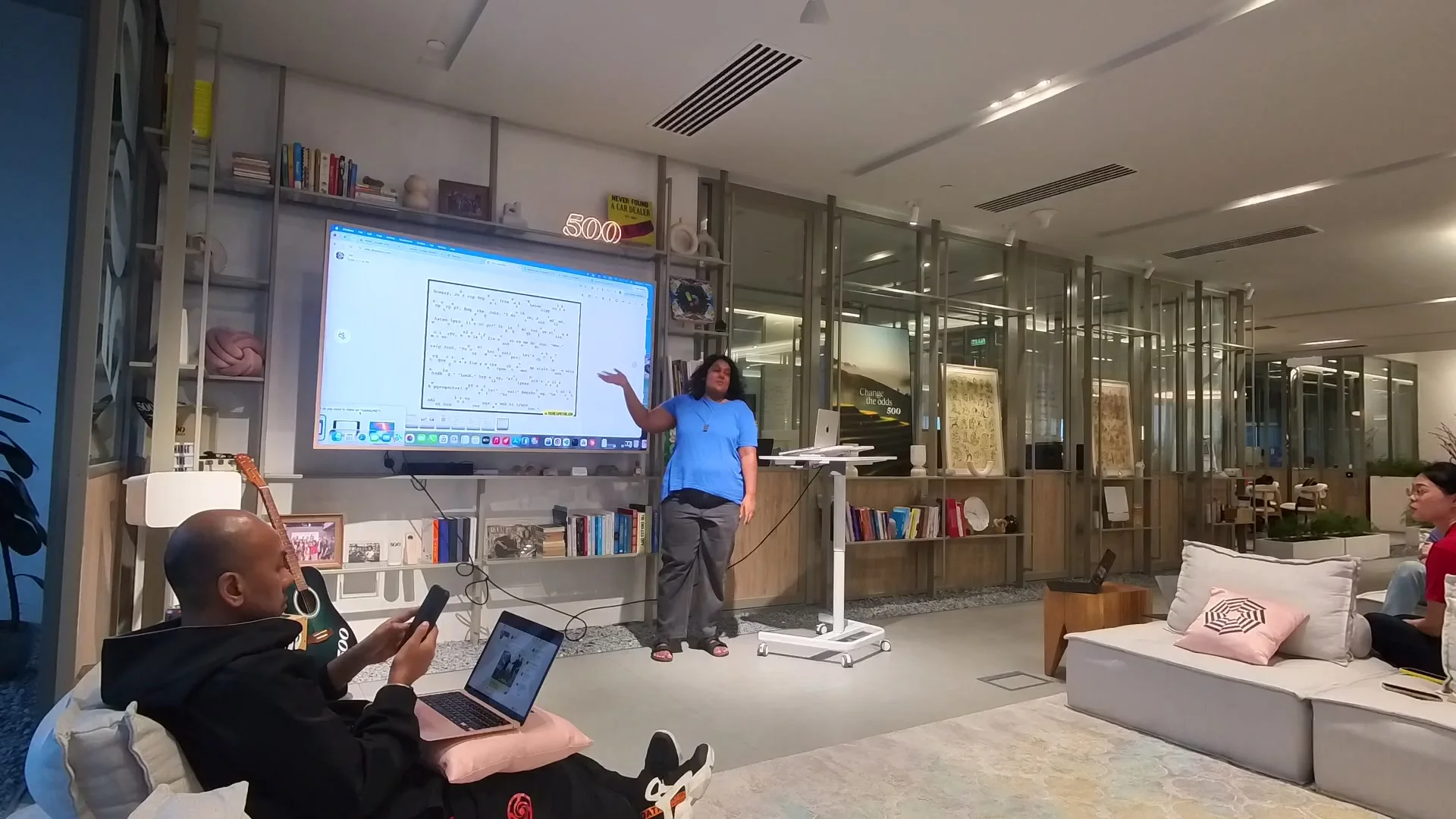
Amara presented Legible Light, an in-browser accessibility extension for readers with dyslexia navigating dense documentation and GitHub codebases. The tool converts web text to the bottom-weighted OpenDyslexic font and adds a cursor-tracking reading ruler that keeps one to two lines clear while blurring surrounding text. In Q&A, she explained that the ruler height is intentionally fixed based on thesis research showing one-to-two-line isolation optimizes reading comprehension. She also ran a live scrambled-text simulation with the room and noted organic adoption through personal storytelling without paid ads.
Distribution, Affiliates, and Short-Form Proof
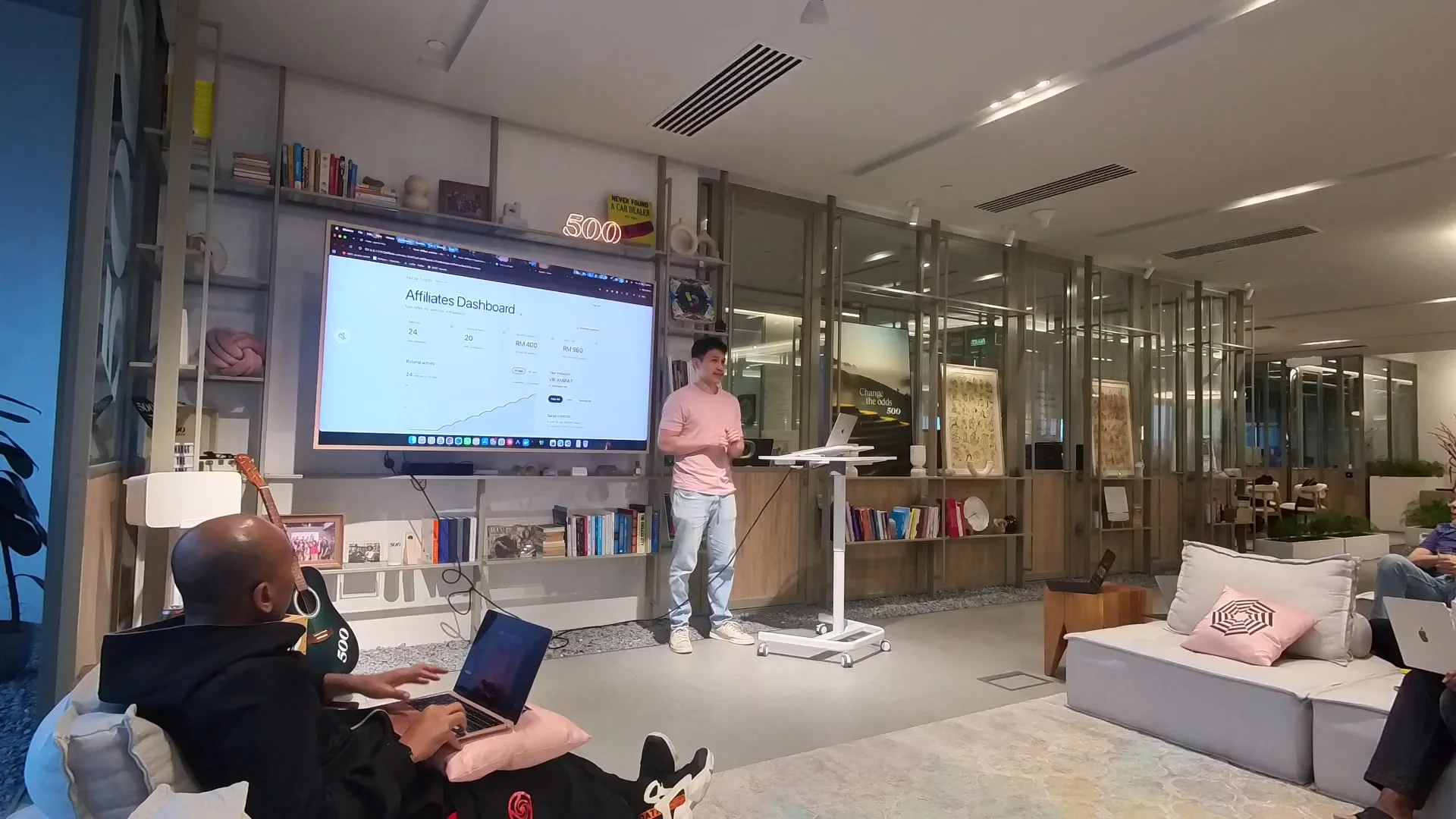
Mark Chua shared how preventive health screening startup Verae (priced at RM 1,000 and above) scaled past founder-network saturation after hitting 25 customers and roughly RM 10,000 in monthly run rate. Verae built an Affiliates Dashboard and recruited fitness coaches and personal trainers as a trust bridge into preventive health, offering a free screening, RM 150 per referral, and tiered bonuses (RM 500 at 10 referrals). His team prompts Claude to rank the top 50 niche coaches and draft personalized outreach, then aligns onboarded affiliates on a shared content calendar for coordinated launch impact.
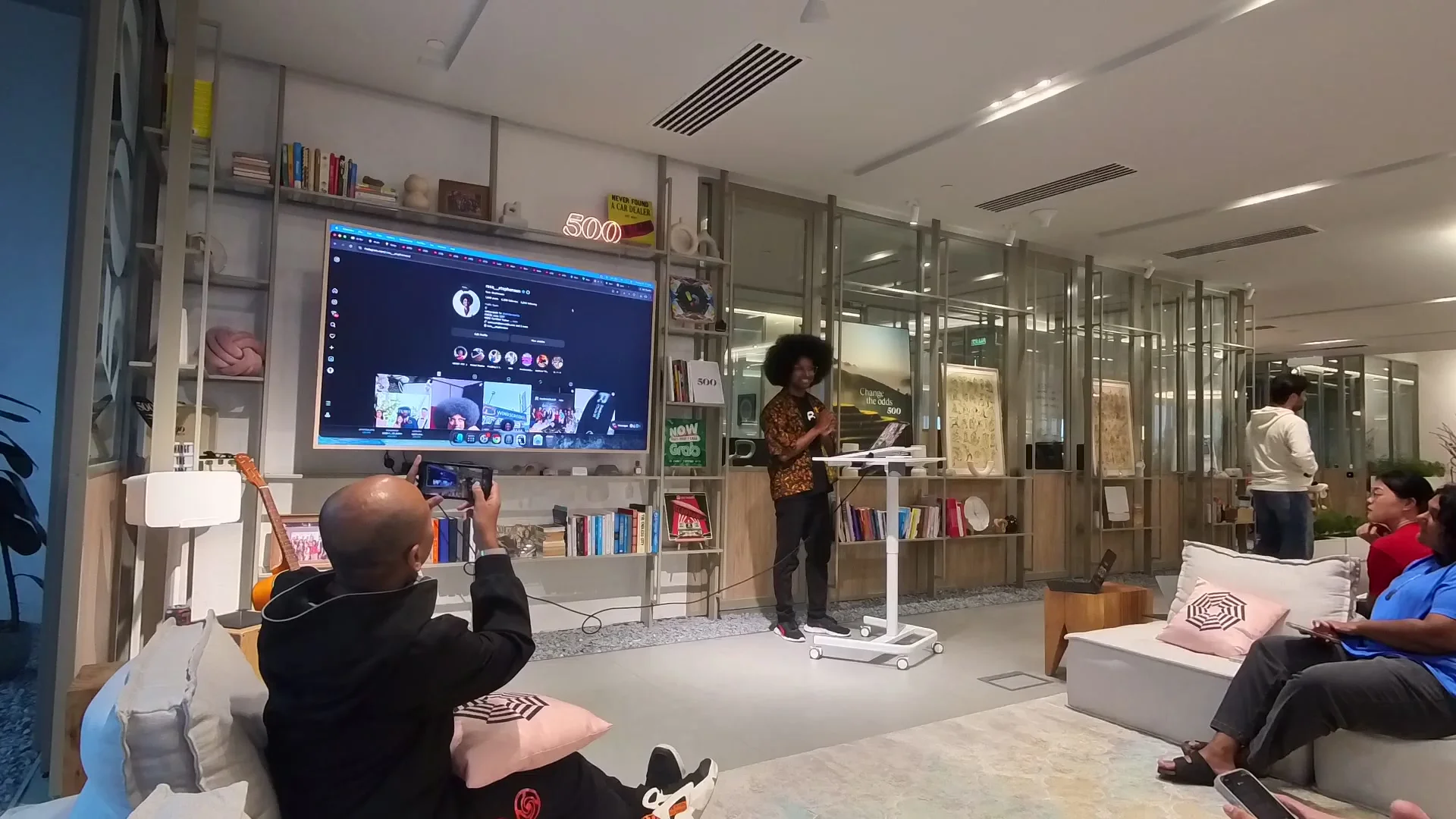
Ross Stephenson (@magicross7) closed the night with a practical lesson on short-form video for service businesses. Telling clients you are a good MC or corporate trainer carries little weight compared to under-one-minute footage. By leaning into unexpected contrasts, such as addressing public questions about his natural afro while speaking fluent Mandarin, his solo clips passed 200,000 views, a viral comedy reel hit 233,000 views, and a collaboration reached 500,000 views. Even when using AI tools for production, he emphasized that a recognizable personal hook is what translates online reach into real-world client authority.
Join the Next Weekly Show & Tell
If you are building with AI in Kuala Lumpur and have a working demo, experiment, or hard-won technical lesson to share, come to our next session: Weekly Show & Tell @TheMalaysian.ai Residency on Thursday, 26 November 2026 at 12:00 pm MYT in Kuala Lumpur. RSVP on Luma.
Featured speakers & demos
26 builders demoed during this session. Browse full talk notes and Q&A in the Knowledge Base
Short-Form Video Strategy for MC Services
Ross Stephenson broke down how under-one-minute comedic reels on Instagram and TikTok drive 200k to 500k views and real-world client credibility for his MC and training business.
Lockipedia: Scaling Campus Lost-and-Found
Shi Wei demonstrated Lockipedia, a campus lost-and-found app with text semantic search on free-tier Supabase and Vercel that scaled to 2,000 active university users.
Solana Agent Payments and Media Workflows
Arthur Wong presented his Solana autonomous agent payment dashboard, environmental video pipelines built with CapCut and Google Flow, and analog acrylic storyboard stitching lessons.
Solana Agent Payments and Media Workflows
Arthur Wong presented his Solana autonomous agent payment dashboard from the Colosseum competition, environmental videos made with CapCut and Google Flow, and why AI stitching failed on painted storyboard seams.
AI Real Estate Marketing Video Pipeline
Hans Yap demoed an automated property staging and video platform combining GPT-image 2, MiniMax, GPT-4o, Seedance, and FFmpeg.
Leap eCommerce MCP and Approval Gates
Shahbaaz Siamwala demoed Leap eCommerce's Claude MCP connector for Shopee, Lazada, and TikTok campaign planning alongside Leap Scout's human-gated Shopify optimization assistant.
SigmaHack KL Bots and GTM Incentives
Faris Irfan showed how form-filling bots, Grokbot, and a gamified points shop power operations and community distribution for SigmaHack KL.
SigmaHack KL Bots and GTM Incentives
Faris Irfan demonstrated the bots, Grokbot workflows, and points-based rewards shop built to automate operations and incentivize both accepted and rejected applicants for SigmaHack KL.
Tsunai: Rust AI Video Editing Engine
James Chu presented Tsunai (AIOS2), a Rust-based AI video editing engine running local GPUs at 100% to render reels at 200 to 400 FPS.
Verae Health Screening Affiliate Engine
Mark Chua explained how Verae moved beyond founder-network saturation by recruiting fitness coaches as affiliates using Claude-ranked outreach, a RM 150 referral fee, and an Affiliates Dashboard.
Verae Health Screening Affiliate Engine
Mark Chua shared Verae's affiliate dashboard, tiered referral bonuses, and Claude-assisted outreach workflow for onboarding fitness and wellness coaches.
Legible Light for Dyslexic Readers
Amara demonstrated Legible Light, a browser extension that converts pages and GitHub codebases to OpenDyslexic with a fixed one-to-two-line reading ruler, alongside a live scrambled-text simulation.
Legible Light for Dyslexic Readers
Amara presented Legible Light, an accessibility browser extension with OpenDyslexic conversion and a cursor-tracking reading ruler.
The Solo Selling Playbook and CAIO
Khalil Nooh shared his agent-readable HTML sales playbook, public spec URLs, Meta Pixel seeding, and hourly fractional CAIO consulting model.
Hands-Free AI Sales Hardware Companion
Nathan Hor demoed a dedicated voice-first AI hardware recorder and companion dashboard that parses meetings into LinkedIn-only contact cards, drafts follow-up emails for spoken approval, and sends transcripts via WhatsApp or email.
Hands-Free AI Sales Hardware Companion
Nathan Hor demonstrated a dedicated AI meeting recorder and companion dashboard designed to automate follow-up emails, WhatsApp transcripts, and calendar invites.
IPO Knowledge Twin for Advisory Teams
Steph Ng demoed IPO Knowledge Twin, an internal digital twin encoding checklists, meeting protocols, and rank-calibrated guidance across juniors, managers, and directors for multi-year Malaysian IPO listings.
Short-Form Video Strategy for MC Services
Ross Stephenson broke down how under-one-minute comedic reels addressing his natural afro and fluent Mandarin reached 200k to 500k views and built real-world client authority for his MC and training business.
Lockipedia Backend Metrics Walkthrough
Recording segment showing Shi Wei displaying backend infrastructure metrics on screen; automatic transcription was unavailable for this interval.
Short-Form Video Strategy for MC Services
Ross Stephenson shared his short-form video strategy on Instagram and TikTok for demonstrating live stage presence to corporate event prospects.
AI Real Estate Marketing Video Pipeline
Hans Yap demonstrated an AI property marketing platform using room-specific GPT-image 2 prompts, MiniMax room-morph transitions, GPT-4o scripts, Seedance assembly, and FFmpeg rendering.
Tsunai: Rust AI Video Editing Engine
James Chu presented Tsunai (AIOS2), a custom Rust AI video editing engine that pushes local laptop GPUs to 100% for 200 to 400 FPS rendering and under-30-second targeted edits.
The Solo Selling Playbook and CAIO
Khalil Nooh presented 'The Solo Selling Playbook', using structured HTML checklists for Claude, ChatGPT, and Groq, public spec routes, Meta Pixel seeding, and a 1,400/hr fractional CAIO offer.
IPO Knowledge Twin for Advisory Teams
Steph Ng presented IPO Knowledge Twin, codifying SOPs, checklists, and rank-aware advisory guidance for Malaysian IPO listing teams.
Lockipedia: Scaling Campus Lost-and-Found
Shi Wei demonstrated Lockipedia (Lostopedia), a campus lost-and-found app with text semantic search that scaled to 2,000 university users on free-tier Supabase and Vercel after backend query optimizations.
Leap eCommerce MCP and Approval Gates
Shahbaaz Siamwala demonstrated Leap eCommerce's Claude MCP connector and Leap Scout's human-approved store optimization agent.